I have a confession. The first time I bought stew meat to make something other than actual stew, my husband looked at the package and said — “isn’t that just the slow cooker stuff?” Fair question. For years I thought the same thing. Stew meat lived in one lane: low and slow, a pot simmering for three hours while you pretend you planned dinner in advance.
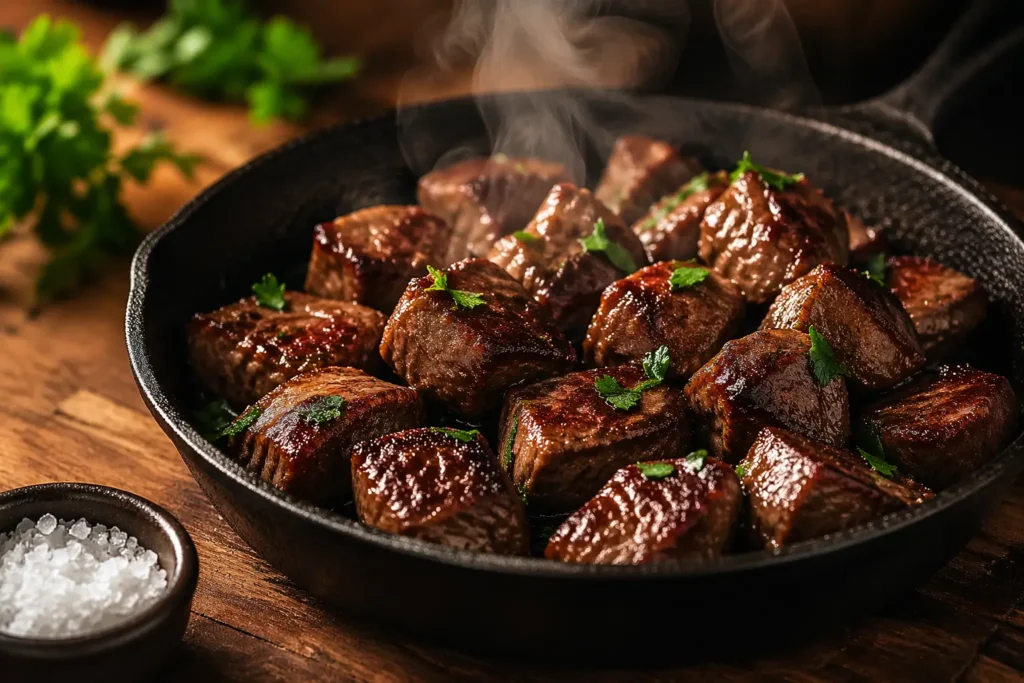
Then one Tuesday night — nothing in the fridge, hungry kids, zero patience — I threw it in a screaming hot cast iron skillet and everything changed. Steak bites with stew meat became one of those easy meat dishes for dinner I make on autopilot now. Bold sear, deep flavor, done in under 30 minutes. And it costs about half of what you’d spend on actual steak. If you’ve been walking past the stew meat at the grocery store without a second thought, this is your sign to stop doing that.
Why Stew Meat Deserves Way More Credit
Let’s talk about why this cut is so underrated, because once you understand it, you’ll start seeing stew meat differently.
Stew meat is almost always cut from chuck — the shoulder area of the cow. Chuck has serious marbling, which means fat running through the muscle, which means flavor. The reason most people only use it for slow cooking is that the connective tissue needs time to break down under low heat. But here’s the thing: if you cook it fast and hot, that connective tissue doesn’t tighten up. You’re not giving it the chance. You hit it with high heat, build a crust, and pull it off the pan while it’s still juicy inside.
The pieces are already trimmed and cut, so there’s zero prep beyond patting them dry. They’re affordable. They’re available everywhere. And when you cook them right, they taste like something you’d pay good money for at a restaurant. Cooking stew beef this way is one of the best kitchen shortcuts I know.
Ingredients for Steak Bites with Stew Meat
Nothing exotic here. This is a recipe built entirely from things you probably already have, which is half the reason it works so well as a last-minute weeknight dinner.
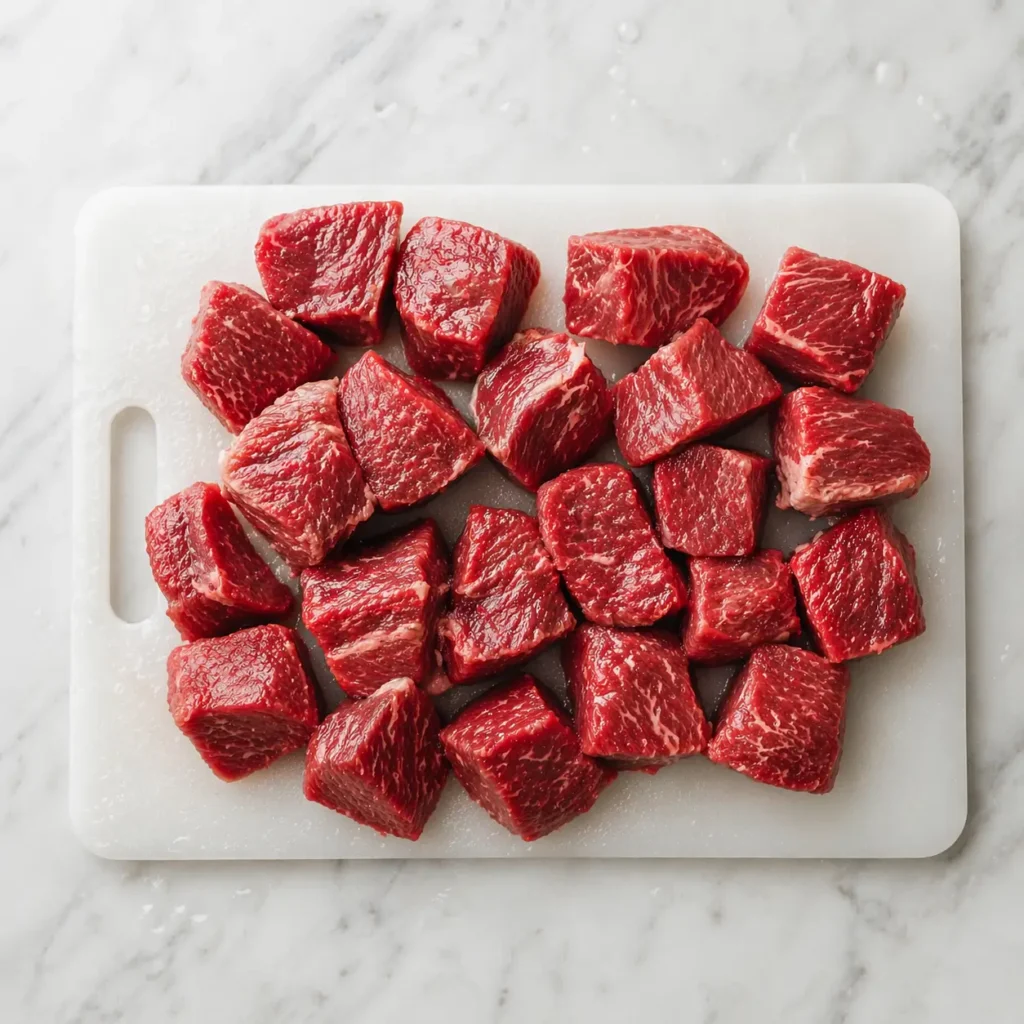
- 1½ lbs beef stew meat, cut into 1-inch pieces
- 2 tbsp olive oil (or a mix of oil and butter — more on that below)
- 3 garlic cloves, minced
- 1 tbsp soy sauce
- 1 tsp smoked paprika
- 1 tsp onion powder
- 1 tsp black pepper
- ½ tsp salt
- 1 tbsp butter, for finishing
- Fresh parsley, chopped, to serve
The soy sauce is doing a lot of work here — it seasons deeply, helps build the crust, and adds that savory, almost umami-forward edge that makes these bites taste like they were marinated for hours even when they weren’t. The smoked paprika is my personal non-negotiable. It gives the whole dish a subtle smokiness that makes people ask “wait, did you grill this?” You did not. You just used smoked paprika.
Smart Swaps When You’re Missing Something
I get messages all the time that go “I started making your recipe and don’t have [ingredient] — what do I do?” So let’s cover the main ones now.
No soy sauce? Worcestershire is a perfect substitute — less salty, more complex, slightly richer. Coconut aminos work great if you’re gluten-free.
Out of smoked paprika? Regular sweet paprika works. A pinch of cumin adds earthiness. A little chipotle powder gives you smokiness plus heat.
Want a little sweetness? Half a teaspoon of honey or brown sugar in the seasoning mix creates a subtle sweet-savory glaze. I started doing this by accident — I grabbed the honey instead of the Worcestershire before my first cup of coffee — and now I do it on purpose at least half the time.
No fresh parsley? Skip it, or use fresh thyme or dried oregano. The herbs are finishing flavor, not the foundation — the beef does the heavy lifting here.
How to Make Steak Bites with Stew Meat: Step by Step
Five steps. I want to walk through each one properly because a couple of them are genuinely the difference between good and great.
Step 1 — Dry the meat. Please don’t skip this. Pull the pieces out of the package and pat them completely dry with paper towels. Every single piece. I know it feels fussy. It is not fussy — it is the single most important step in this entire recipe. Moisture on the surface of meat creates steam when it hits the pan. Steam prevents browning. No browning means no crust, no flavor, just gray sad beef. Dry beef browns. Wet beef steams. Thirty seconds with paper towels and you’ve set yourself up for a proper sear.
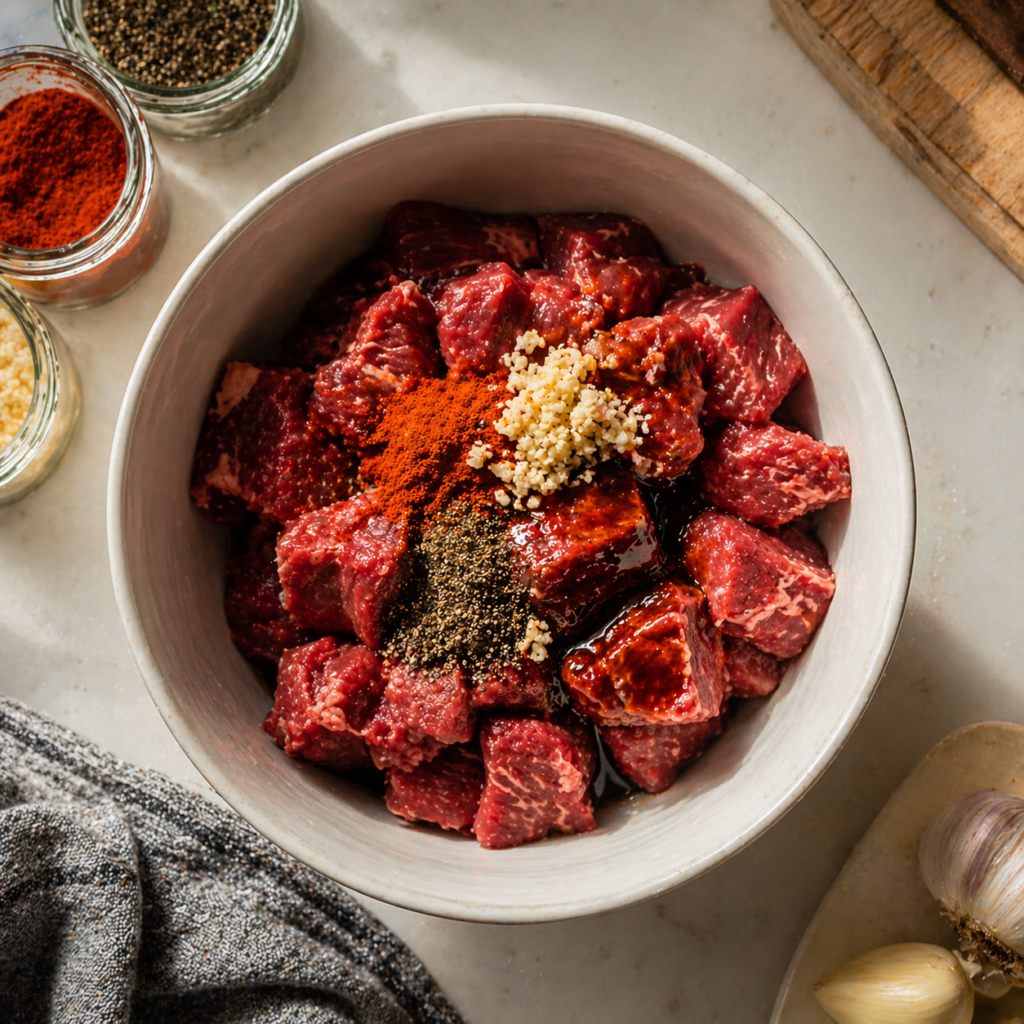
Step 2 — Season and let it rest briefly. In a bowl, toss the dry beef pieces with the soy sauce, minced garlic, smoked paprika, onion powder, salt, and pepper. Mix until everything is coated. Let it sit for 10 to 15 minutes while you heat the pan. If you have 30 minutes, even better. The soy sauce starts working into the surface of the meat quickly, so even a short rest makes a real difference.
Step 3 — Get the pan properly, actually hot. This is where most people go wrong. They heat the pan for a minute, think it’s ready, and add the meat — but the pan isn’t hot enough. Cast iron takes time. Heat your oil over medium-high for a full 2 minutes. When the oil shimmers and just starts to look like it might smoke, you’re ready. If the beef doesn’t sizzle aggressively on contact, the pan needs more time.
Step 4 — Sear in a single layer, don’t touch it. Add beef with space around each piece. If your skillet can’t fit everything without crowding, cook in two batches. Crowded beef steams instead of searing — you lose the whole point. Once the pieces are in, leave them alone for 2 full minutes. Don’t poke, don’t stir, don’t check. When a piece is ready to flip it releases on its own. If you have to force it, give it another 30 seconds.
Step 5 — Finish with butter and serve immediately. Once the beef is browned on all sides — about 4 to 5 minutes total — drop in a tablespoon of butter and toss everything together for another 60 seconds. The butter coats every piece in this glossy, rich finish that takes the whole dish up a notch. Pull it off the heat, scatter the fresh parsley on top, and serve right away. Total active cook time is about 12 minutes. That’s it.
Three Variations That Are Worth Making on Purpose
The base recipe is great on its own, but once you’ve made it a couple of times, these variations are worth trying.
Garlic butter herb bites. Skip the smoked paprika. After searing, add 2 tablespoons of butter, 4 minced garlic cloves, and a few sprigs of fresh thyme directly to the pan. Baste the beef with the foamy garlic butter for 60 seconds before serving. It tastes like steakhouse food and takes the same total time as the base recipe. This is my go-to version when I want to feel slightly fancy on a Wednesday.
Spicy skillet bites. Add red pepper flakes and a teaspoon of hot sauce to the seasoning mix. Serve over steamed white rice with a drizzle of the pan juices. The heat builds slowly and the rice balances it perfectly.
One skillet pasta night. Sear the bites and set them aside. In the same pan — don’t wipe it out — deglaze with broth, then cook pasta directly in the pan with more broth and a splash of cream. When the pasta is done, fold the beef back in. The fond from the beef becomes the sauce. It’s one of my favorite one pot pasta recipes and it saves you washing an extra pot, which at the end of a long day matters more than it should.
What to Serve These With
These bites are flexible enough to go in a dozen directions depending on what you’re in the mood for or what’s already in your fridge.
Mashed potatoes are the move for a proper comfort food dinner. The pan juices left in the skillet act like a natural light gravy — spoon them right over the top. Creamy, rich, deeply satisfying. This is what I make when it’s cold outside and nobody wants to think too hard.
Buttered egg noodles are a close second. Faster than mashed potatoes and they catch the pan sauce beautifully. Toss the noodles with butter and a little pasta water, plate the bites on top, done.
For something lighter, a big green salad with balsamic vinaigrette works surprisingly well — the acid cuts through the richness of the beef and the whole plate feels balanced. You can also stuff these into a crusty hoagie roll with caramelized onions for a proper sandwich, or serve them in a grain bowl over farro or quinoa. They’re flexible enough to work as lazy dinners that genuinely don’t taste lazy.
How to Store and Reheat Leftovers
Store in an airtight container in the fridge for up to 3 days. One thing I’ve noticed: the flavor actually gets better the next day. The garlic and smoked paprika settle deeper into the meat overnight and everything tastes more developed. Day-two leftovers are genuinely good.
To reheat, use a skillet on medium with a small splash of beef broth — 2 to 3 minutes, turning once. The broth keeps them moist and recreates a little of the sauce. Avoid the microwave; it toughens the exterior quickly. For freezing, cool completely, store in a zip-lock bag for up to one month, and thaw overnight in the fridge before reheating.
FAQ — Steak Bites with Stew Meat
Can I use frozen stew meat?
Yes, but thaw it completely first and dry it very thoroughly before seasoning. Any residual moisture from thawing will prevent the sear from forming properly.
How do I know when the bites are cooked through?
The target internal temperature is 145°F for medium. If you don’t have a thermometer, cut one piece open — you want a slightly pink center with a dark caramelized exterior. Fully gray all the way through means it’s overcooked; pull the next batch off a minute earlier.
My beef came out gray instead of browned. What happened?
Almost certainly one of two things: the pan wasn’t hot enough, or you crowded the pieces. Both create steam instead of a sear. Next time, heat the pan longer, cook in smaller batches, and make sure the beef is completely dry before it goes in.
Is stew meat the same as chuck roast?
Often yes. Pre-cut stew meat in most grocery stores is chuck or round that’s already been trimmed and portioned. Either works here — just keep the pieces close to 1 inch so they cook evenly.
Can I turn this into an actual beef stew recipe if I change my mind?
Absolutely. Sear the pieces using this same method, then add beef broth, Worcestershire sauce, diced potatoes, carrots, and a bay leaf. Cover and simmer on low for 45 to 60 minutes. Same starting point, completely different direction. The sear you build at the beginning adds depth to the broth that you don’t get if you skip it.
How long should I actually marinate the meat?
Ten minutes does something. Thirty minutes does more. Two hours is the sweet spot. Overnight is fine — just keep it covered in the fridge and rinse off excess soy sauce before searing or the surface can get too salty to brown properly.
Can I make this in the oven instead of on the stovetop?
Yes. Spread seasoned pieces in a single layer on a sheet pan and roast at 425°F for 12 to 15 minutes, flipping once halfway through. You won’t get quite the same depth of crust as a cast iron sear, but it’s a solid hands-off option when the stovetop is already full or you’re cooking for a crowd.
That’s everything you need. Cheap cut, big flavor, 30 minutes, done. Once you make these the first time you’ll realize why stew meat has been sitting in the butcher’s case this whole time just waiting for its moment.
Made this? Drop a comment below with how you served yours — I read every single one.
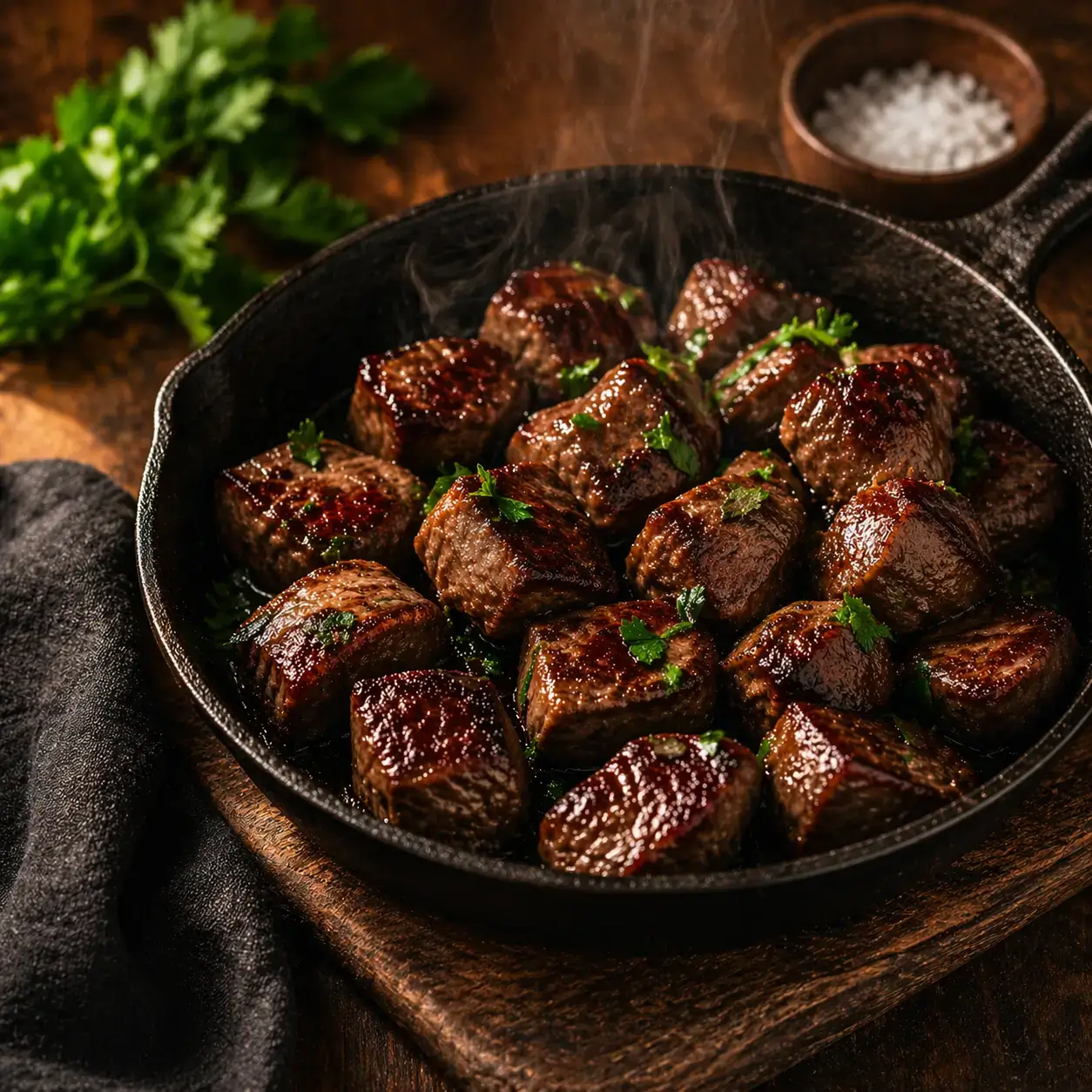

Steak Bites with Stew Meat
Ingredients
Method
- Pat the stew meat pieces completely dry with paper towels — every single piece. Moisture on the surface prevents browning and gives you gray, steamed beef instead of a proper sear. This 30-second step makes the biggest difference in the entire recipe.
- In a bowl, toss the dried beef with the soy sauce, minced garlic, smoked paprika, onion powder, salt, and black pepper. Mix until every piece is evenly coated. Let it rest for 10 to 15 minutes at room temperature while you heat the skillet.
- Heat olive oil in a large cast iron skillet over medium-high heat for a full 2 minutes. The oil should shimmer and just begin to look like it might smoke — that's your green light. If the beef doesn't sizzle aggressively the moment it hits the pan, the skillet needs more time.
- Add the seasoned beef in a single layer with space around each piece. Do not crowd the pan — cook in two batches if needed. Let the beef sear undisturbed for 2 minutes per side. Do not poke, stir, or move it. The piece will release cleanly when the crust is ready; if you have to force it, give it another 30 seconds.
- Once all sides are deep brown and caramelized — about 4 to 5 minutes total — add the butter directly to the pan and toss everything together for 60 seconds until the beef is glossy and coated. Remove from heat, scatter fresh parsley on top, and serve immediately.
Notes
• No soy sauce? Worcestershire sauce works perfectly and gives a slightly richer, more complex flavor. For gluten-free, use coconut aminos.
• Out of smoked paprika? Regular sweet paprika works, or add a pinch of cumin for earthiness.
• Want a sweet-savory glaze? Add ½ tsp honey or brown sugar to the seasoning mix before tossing.
• No fresh parsley? Use fresh thyme, chives, or a pinch of dried oregano. TIPS FOR A PERFECT SEAR
• Always pat the meat completely dry — this is non-negotiable.
• Never crowd the pan. Two batches beats one crowded batch every time.
• Do not move the beef for the first 2 minutes. Let the crust form and release on its own. STORAGE & REHEATING
• Fridge: Store in an airtight container for up to 3 days. Flavor improves overnight.
• Reheat: Skillet over medium with a splash of beef broth, 2–3 minutes. Avoid the microwave.
• Freezer: Cool completely, store in a zip-lock bag for up to 1 month. Thaw overnight in the fridge before reheating. SERVING IDEAS
Over mashed potatoes, buttered egg noodles, steamed white rice, in a grain bowl, or stuffed into a crusty hoagie roll with caramelized onions. VARIATIONS
• Garlic Butter Herb: Skip the paprika. After searing, add 2 tbsp butter, 4 minced garlic cloves, and fresh thyme. Baste for 60 seconds before serving.
• Spicy Skillet: Add red pepper flakes and 1 tsp hot sauce to the seasoning mix. Serve over rice.
• One Skillet Pasta: After searing, deglaze the same pan with broth, cook pasta in the pan with broth and cream, then fold the beef back in.