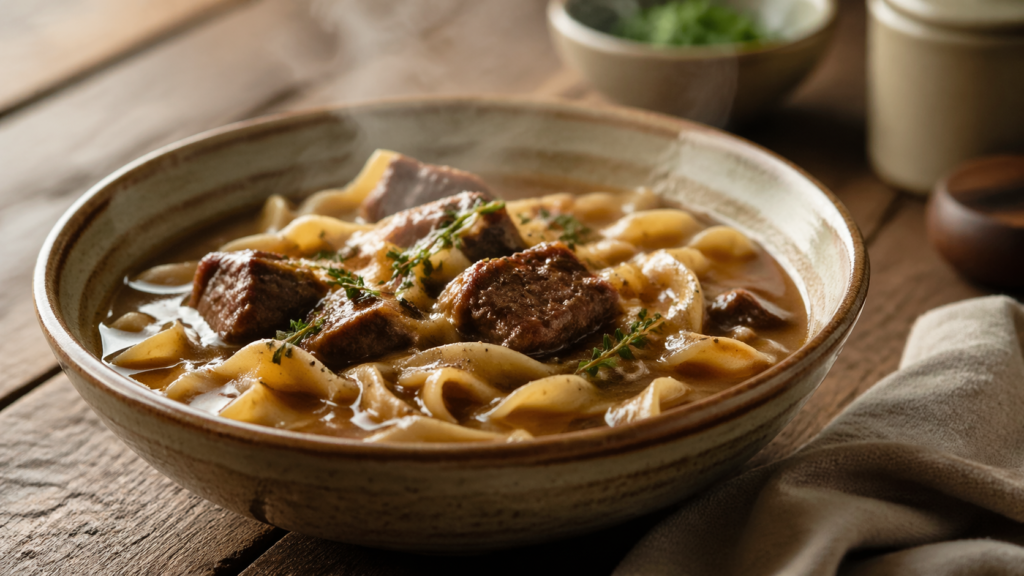
There’s a particular kind of cold that settles in on a grey Tuesday afternoon — not dramatic, just damp and grey and relentless — where the only reasonable response is a pot of something warm on the stove. That’s how this recipe first became a regular in my kitchen. No special occasion, no grand plan. I had a pack of stew meat in the fridge, half a bag of egg noodles in the pantry, and zero motivation to do anything complicated. What came out of that pot was so good I almost felt bad about how little effort it took.
This homemade stovetop beef and noodles recipe has since become one of those dishes I come back to again and again — especially from October through March. It’s hearty without being heavy, deeply savory, and the kind of meal that makes your whole kitchen smell like you’ve been cooking for hours even when you haven’t. If you’ve been looking for easy recipes for winter that don’t require a dozen ingredients or a culinary degree, you’ve landed in the right place.
Why Stew Meat Is the Unsung Hero of This Dish
Most people walk past stew meat at the grocery store. It’s not flashy. It doesn’t have the appeal of a ribeye or a tenderloin. But here’s the thing — stew meat is one of the best ideas for stewing beef precisely because of its connective tissue and marbling. When it’s cooked low and slow in liquid, that tough collagen melts down into something silky and rich. The broth gets body. The beef gets tender. And you’ve spent a fraction of what you’d pay for a fancier cut.
Chuck is the most common choice, and for good reason. It has enough fat to stay moist during a long braise but not so much that the dish feels greasy. Bottom round works in a pinch, though it’s a bit leaner and needs slightly more liquid to stay soft. If your grocery store sells pre-cut stew meat without specifying the cut, it’s almost always chuck — and that’s perfectly fine.
One thing I learned the hard way: don’t skip the browning step. I did once, on a night when I was impatient and convinced it wouldn’t matter. The flavor was noticeably flatter. That golden crust you get from searing the beef in a hot pan? It builds the foundation of the entire dish. Five extra minutes, and it makes a real difference.
What You’ll Need (Simple, Honest Ingredients)
There’s nothing exotic in this recipe. It’s a classic list of pantry staples that somehow add up to something truly satisfying — which is honestly what makes it one of the better inexpensive beef recipes out there.
For the beef and broth:
- 1½ to 2 lbs beef stew meat, cut into 1–1½ inch chunks
- 2 tablespoons vegetable oil (or butter for extra richness)
- 1 medium yellow onion, diced
- 3 cloves garlic, minced
- 3 cups beef broth (low-sodium preferred so you can control the salt)
- 1 cup water
- 1 tablespoon Worcestershire sauce
- 1 teaspoon soy sauce
- 1 teaspoon dried thyme
- Salt and black pepper to taste
For thickening:
- 2 tablespoons cornstarch
- 3 tablespoons cold water
For the noodles:
- 2 to 2½ cups wide egg noodles (uncooked)
That’s it. No canned soup, no mystery packets. Just real ingredients doing their job.
How to Make Homemade Stovetop Beef and Noodles Step by Step
Step 1 — Sear the beef.
Pat your stew meat dry with paper towels — this is key for getting a proper sear rather than a steam. Heat oil in a large Dutch oven or heavy-bottomed pot over medium-high heat. Season the beef generously with salt and pepper, then add it in a single layer. Don’t overcrowd the pan, or the meat will steam instead of browning. Sear for 2–3 minutes per side until you get a deep mahogany crust, then remove and set aside.
Step 2 — Build the base.
In the same pot, reduce the heat to medium. Add the diced onion and cook for about 4 minutes until softened and starting to turn golden. Add the garlic and stir for another 30 seconds — you’ll smell it immediately, that warm, almost sweet hit of garlic hitting the pan. Scrape up any brown bits from the bottom as you go; those bits are pure flavor.
Step 3 — Braise the beef.
Return the seared beef to the pot. Pour in the broth, water, Worcestershire sauce, soy sauce, and thyme. Stir everything together and bring to a boil. Once it’s boiling, reduce the heat to low, cover with a lid, and let it simmer for 1 hour 15 minutes to 1 hour 30 minutes. Check it occasionally — the beef should become genuinely tender and easy to pull apart with a fork.
Step 4 — Thicken and add noodles.
Whisk the cornstarch with cold water in a small bowl until smooth. Pour it into the pot while stirring, and let the broth thicken for a couple of minutes. Then add the egg noodles directly into the pot. Cover and cook on low for another 10–12 minutes, stirring once or twice, until the noodles are soft and have absorbed some of that gorgeous beefy broth. Taste and adjust seasoning before serving.
Three Tips That Actually Change the Result
Tip 1 — Use low-sodium broth and build from there.
Regular beef broth can tip the whole dish into too-salty territory once it reduces and concentrates. Starting with low-sodium gives you control. Add salt at the end when you can actually taste what you’re working with.
Tip 2 — Let the noodles cook in the broth, not separately.
I’ve seen versions of this recipe where the noodles are cooked in a separate pot and then added. You can do it that way, but you’ll miss the way egg noodles soak up flavor when they cook directly in the braising liquid. The texture is softer, almost silky. Worth it.
Tip 3 — Rest the dish for 5 minutes before serving.
After you take it off the heat, just let it sit covered for five minutes. The sauce settles, the noodles finish absorbing, and the flavors sort of round out. It sounds minor. It genuinely isn’t. This is one of those easy, soft dinner recipes where patience in the final stretch pays off.
Variations Worth Trying
This dish is adaptable in ways that make it genuinely useful for easy meals with stew meat across different moods and pantries.
Add mushrooms. Slice a cup of cremini mushrooms and add them to the onions. They deepen the umami flavor of the broth significantly.
Make it creamy. Stir in ½ cup of sour cream right at the end — off the heat — for something closer to a beef stroganoff vibe. Rich, tangy, and incredibly good over egg noodles.
Add vegetables. Diced carrots and celery added in the first 30 minutes of braising soften beautifully and give the dish more body. Frozen peas stirred in at the very end keep their color and add a little sweetness.
Use a different noodle. Wide egg noodles are classic, but rotini, pappardelle broken into thirds, or even orzo all work. Just adjust cooking time accordingly.
Ingredient Substitutions for What You Actually Have
No beef broth? Chicken broth works. The flavor is lighter but still very good — especially if you boost it with an extra splash of Worcestershire.
No cornstarch? A tablespoon of flour whisked into a bit of cold water does the same thickening job, though the sauce won’t be quite as glossy.
No egg noodles? Any short pasta holds up well. Avoid angel hair or anything too delicate — it’ll dissolve into the broth before you can serve it.
Want to use a different protein? This method works beautifully with bone-in chicken thighs (reduce braising time to 40 minutes) or even pork shoulder cut into chunks. The broth and technique are the constants; the protein is flexible.
Troubleshooting: When Things Go a Little Sideways.
The broth is too thin. Make another small slurry of cornstarch and cold water — 1 tablespoon each — and stir it in. Let it simmer uncovered for a few minutes, and it’ll tighten right up.
Beef is still tough after an hour. Keep going. Seriously. Stew meat sometimes needs closer to 90 minutes or even two hours, depending on the cut and the size of the chunks. If it’s not tender yet, it just needs more time on low heat with the lid on.
The noodles got too soft and mushy. This usually means the heat was too high during the noodle phase, or they cooked a bit too long. For next time, keep the heat at a true low and check at the 10-minute mark. For now, the flavor is still there, and honestly, sometimes overly soft noodles in a beefy broth are comfort food at its absolute peak.
The dish tastes flat. A splash of soy sauce, a bit more Worcestershire, or even a tiny squeeze of lemon right at the end can snap everything into focus. Salt alone doesn’t always do it — you need a little acid or depth to pull the whole thing together.
Storage, Leftovers, and Serving Ideas
Leftovers keep well in the fridge for up to 4 days. Store everything together — noodles in the broth — and when you reheat, add a splash of broth or water and stir over medium-low heat until warmed through. The noodles will have absorbed even more liquid overnight, so don’t skip that extra splash.
For freezing: the beef and broth freeze beautifully for up to 3 months. The noodles, however, don’t fare well after freezing — they turn mushy and fall apart. If you’re planning to freeze, cook the noodles fresh when you’re ready to serve from frozen.
Serving ideas worth knowing: a hunk of crusty bread alongside is non-negotiable in my house. A simple green salad keeps things balanced. If you want to stretch the dish further, serve it over mashed potatoes, which sounds excessive but is actually incredible, because the beefy broth acts like a gravy. This is genuinely one of the best easy winter supper ideas I’ve cooked, because it improves with time. The second-day version, reheated slowly, might honestly be better than day one.
Frequently Asked Questions
Can I make this in a slow cooker instead of on the stovetop?
Yes. After searing the beef and sautéing the onions and garlic, transfer everything except the noodles to a slow cooker. Cook on low for 7–8 hours or high for 4–5 hours. Stir in the cornstarch slurry and the noodles about 30 minutes before serving with the slow cooker set to high.
What cut of beef works best for this recipe?
Chuck is the classic choice for this kind of long braise — it has the right fat content and becomes incredibly tender with time. It’s also one of the most inexpensive beef recipes you can build a dinner around. Avoid lean cuts like sirloin, which tend to dry out during extended simmering.
Can I use frozen stew meat without thawing it first?
You can, but you’ll lose the ability to sear it properly — and the sear is where a lot of the flavor comes from. Thawing overnight in the fridge is the better path whenever you have the time.
How do I keep the noodles from getting mushy?
Cook them on the lowest possible simmer, covered, and check them early — around the 9–10 minute mark. Every stove runs slightly differently. Once they’re tender but still have a little structure, take them off the heat and let the residual warmth finish the job.
Is this recipe kid-friendly?
Very much so. The beef is soft enough to eat without much chewing, the broth is mild, and the noodles make it familiar and approachable. If you’re cooking for particularly picky eaters, skip the mushrooms and keep the seasoning simple.
Can I double the recipe?
Absolutely. Use a larger pot and keep the ratios the same. The braising time stays the same since it’s the size of the individual beef chunks — not the total quantity — that determines how long they need.
What’s the difference between this and beef stew?
Mostly the noodles and the texture of the sauce. Traditional beef stew tends to have a thicker, more vegetable-heavy base. This stovetop version has a glossier, broth-forward sauce that soaks into the noodles in a way that makes every bite deeply savory. It’s a bit lighter, faster, and — personal opinion — even more satisfying on a weeknight.
So — are you a purist who keeps it classic with just the noodles and broth, or do you load yours up with mushrooms, carrots, or a spoonful of sour cream? I’d genuinely love to know how you make it your own. Drop it in the comments below!
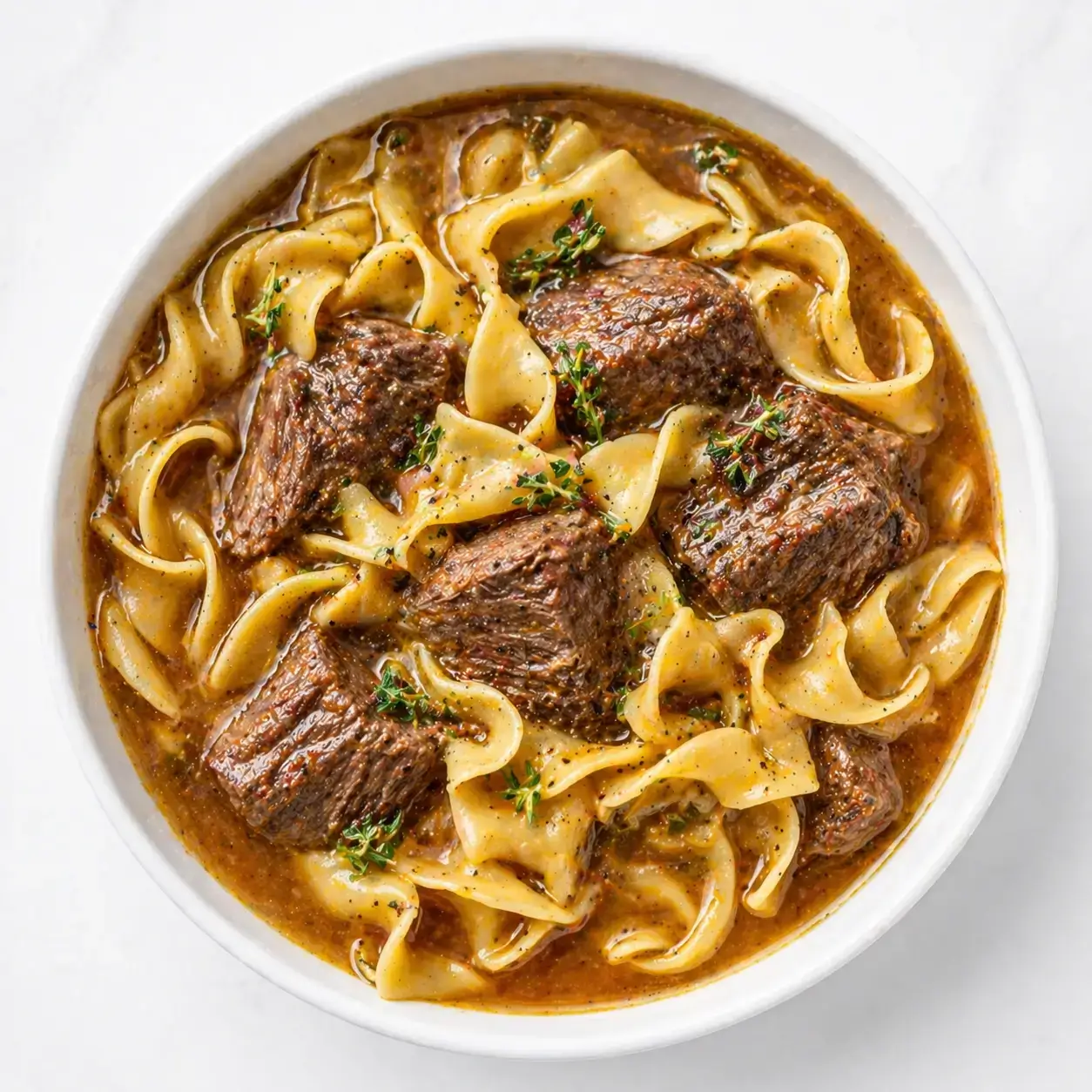

Homemade Stovetop Beef and Noodles
Ingredients
Equipment
Method
- Pat the beef stew meat completely dry with paper towels. Season generously with salt and black pepper on all sides. Heat the vegetable oil in a large Dutch oven or heavy-bottomed pot over medium-high heat.
- Add the beef in a single layer — do not overcrowd the pan. Sear for 2 to 3 minutes per side without moving until a deep mahogany-brown crust forms. Work in batches if needed. Remove the seared beef and set aside on a plate.
- Reduce heat to medium. In the same pot, add the diced onion and cook for about 4 minutes, stirring occasionally, until softened and starting to turn golden. Add the minced garlic and stir for 30 seconds until fragrant. Scrape up any browned bits from the bottom of the pot.
- Return the seared beef to the pot. Pour in the beef broth, water, Worcestershire sauce, soy sauce, and dried thyme. Stir to combine. Bring the mixture to a full boil over medium-high heat.
- Once boiling, reduce heat to low. Cover the pot with a lid and let the beef braise for 1 hour 15 minutes to 1 hour 30 minutes, checking occasionally. The beef is ready when it is genuinely tender and pulls apart easily with a fork.
- In a small bowl, whisk together the cornstarch and cold water until fully smooth. Pour the slurry into the pot while stirring constantly. Let the broth simmer for 2 minutes until it thickens and turns glossy.
- Add the wide egg noodles directly into the pot. Stir gently to submerge them in the broth. Cover and cook on low for 10 to 12 minutes, stirring once or twice, until the noodles are soft and have absorbed some of the broth.
- Remove from heat. Taste and adjust seasoning with salt, pepper, or an extra splash of Worcestershire if needed. Let the dish rest covered for 5 minutes before serving — this allows the sauce to settle and the flavors to round out.