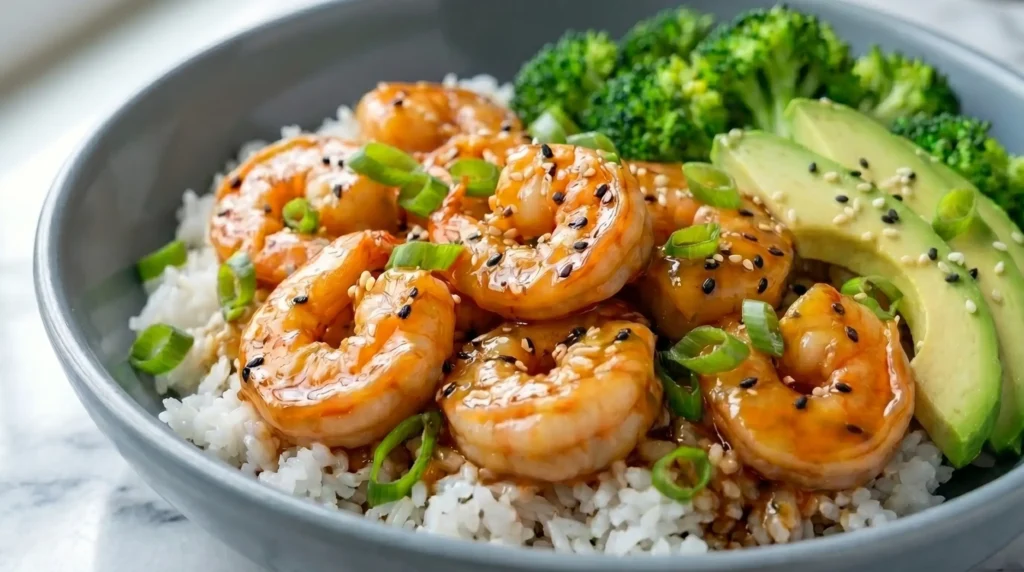
I still remember the night this teriyaki shrimp rice bowl recipe basically saved my dinner plans. It was a Tuesday, my laptop had just eaten three hours of my evening, and all I had in the fridge was a bag of frozen shrimp, half an onion, and a soy sauce bottle that looked older than my last apartment lease. Twenty minutes later, I was sitting on my counter (don’t judge me, the table was covered in mail), eating one of the best bowls of food I’d made in weeks.
That lopsided little dinner is basically the blueprint for what you’re about to make. The shrimp turn this glossy, almost lacquered orange-pink the second the teriyaki sauce hits the hot pan, and your kitchen starts smelling like a hibachi grill set up shop on your stove. Sticky-sweet, a little garlicky, with that warm soy aroma that makes everyone wander in asking what’s for dinner. Add a scoop of fluffy rice and a handful of crunchy veggies, and you’ve got a meal that feels like a treat but takes less time than waiting for delivery.
What I love most about teriyaki shrimp rice bowls is how forgiving they are. You don’t need a steady hand or years of practice, just a hot pan, a few pantry staples, and about twenty minutes. Below, you’ll find everything I’ve learned from making this dish more times than I can honestly count, including the one time I nearly ruined dinner by walking away for “just a second.” Let’s get into it.
Why This Teriyaki Shrimp Rice Bowls Recipe Works for Busy Weeknights
Here’s the thing about a good teriyaki shrimp rice bowl: it doesn’t ask much of you. Shrimp cook in minutes, not hours. The sauce comes together in one small saucepan while your rice does its own thing in the background. And unlike a lot of seafood dinners that feel fussy or intimidating, this one is genuinely forgiving if your timing slips a little.
I’ve made this easy shrimp dinner on rushed Wednesdays, lazy Sunday afternoons, and one memorable night for a friend who swore up and down she didn’t like seafood. She’s asked for the recipe twice since then, so I’m calling that a win.
There’s also the texture thing. The sauce turns sticky and glossy, the shrimp pick up a little char at the edges, the rice stays soft and warm underneath, and if you toss in some veggies, you get a satisfying crunch too. That contrast, soft and sticky and a little snappy all in one bite, is honestly half of what makes teriyaki shrimp rice bowls so good.
What You’ll Need for a Homemade Teriyaki Shrimp Rice Bowl
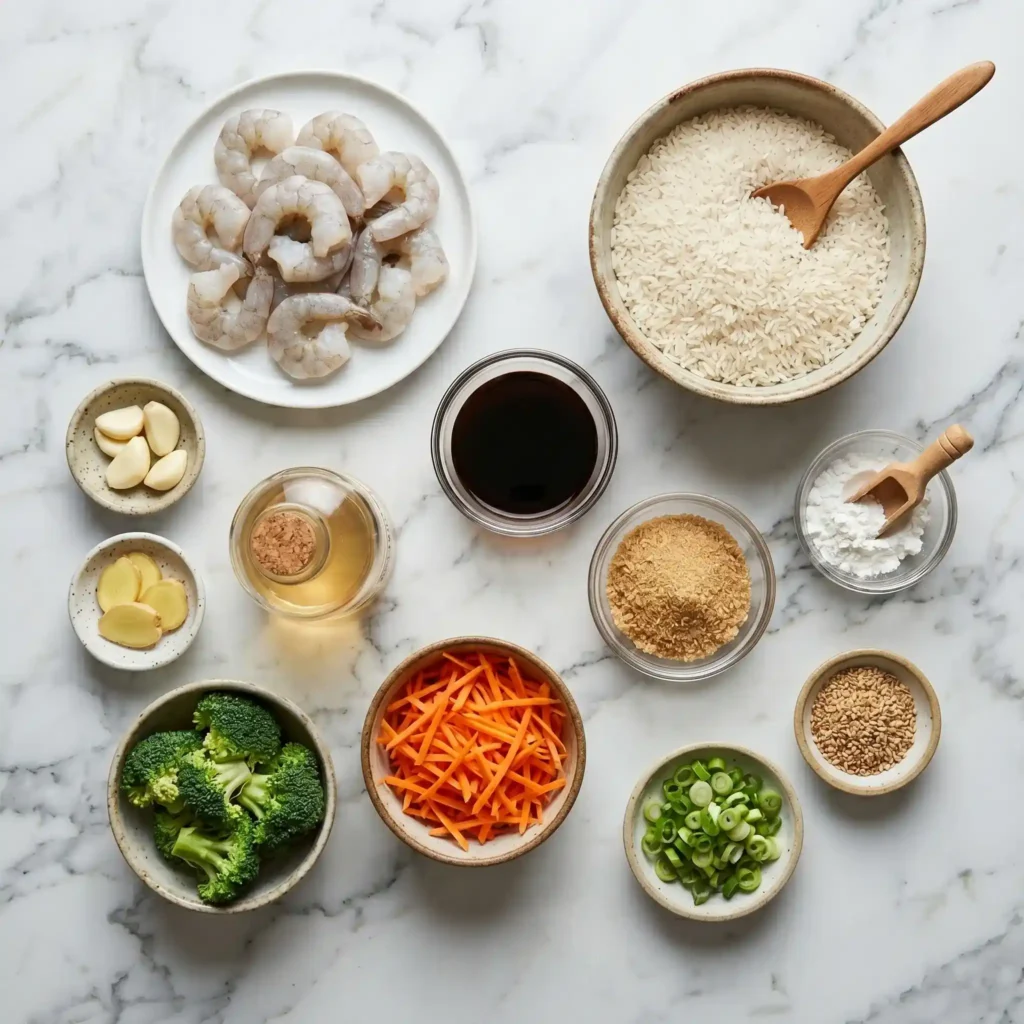
You don’t need anything exotic for homemade teriyaki shrimp, just a handful of ingredients that probably already live in your kitchen.
- Shrimp – peeled and deveined, fresh or frozen and thawed. Medium to large shrimp work best, so they don’t overcook before they get that golden sear.
- Soy sauce – the backbone of the sauce. Low-sodium works fine if you’re watching salt.
- Brown sugar or honey – for that classic sticky-sweet teriyaki flavor.
- Garlic and fresh ginger – minced, these give the sauce its warmth.
- Rice vinegar – just a splash, to balance the sweetness.
- Cornstarch – mixed with a little water to thicken the sauce into that glossy glaze.
- Cooked rice – white, brown, or even cauliflower rice if you’re keeping things lighter.
- Vegetables – steamed broccoli, shredded carrots, edamame, or whatever’s hanging out in your crisper drawer.
- Sesame seeds and green onion – for garnish, because a little crunch and color go a long way.
I usually reach for medium to large shrimp; something labeled 31/40 or 21/25 count per pound works well. Anything much smaller tends to overcook before it even gets a chance to brown, and anything bigger just needs a touch more time in the pan.
No fresh ginger on hand? Ground ginger works fine, just use about a third of the amount. Out of rice vinegar? A splash of apple cider vinegar or a little fresh lime juice gets you close enough, and honestly, I can’t always tell the difference once everything’s mixed.
How to Make Teriyaki Shrimp Rice Bowls, Step by Step
Once your ingredients are prepped, this whole shrimp and rice recipe comes together faster than it takes to set the table.
- Cook your rice first. It needs the most time, and there’s nothing worse than perfectly cooked shrimp sitting around going cold while you waitfor then rice. A rice cooker works great here if you have one. Once it’s done, fluff it with a fork and leave the lid on to keep it warm.
- Make the teriyaki sauce. In a small saucepan, whisk together soy sauce, brown sugar, garlic, ginger, and rice vinegar. Bring it to a gentle simmer, then stir in your cornstarch slurry. Keep whisking, it’ll go from watery to glossy and thick in under a minute, almost like magic, except it’s really just chemistry and a little patience.
- Let your shrimp sit at room temperature for about ten minutes, then pat them completely dry. This step feels small, but it’s the real difference between a good sear and shrimp that just steam sadly in the pan. Season lightly with salt and pepper.
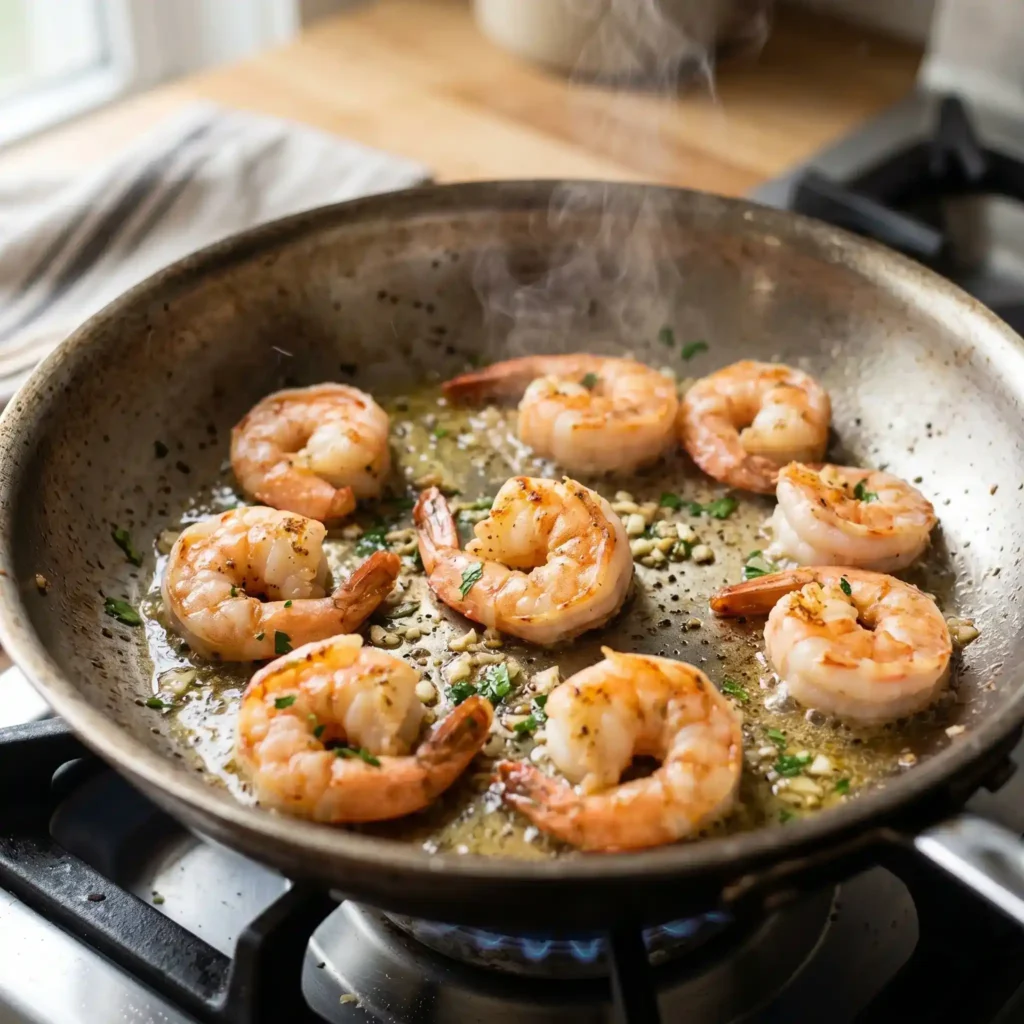
- Sear the shrimp in a hot, oiled skillet. About 60 to 90 seconds per side is plenty. You’ll know they’re ready when they turn that opaque pink-orange color and curl into a loose “C” shape. If they curl into a tight little “O,” they’ve gone too far; more on that in a minute.
- Toss the shrimp in the warm teriyaki sauce until every piece is coated in that sticky, glossy glaze. The smell at this point is honestly half the reason I make this dish in the first place.
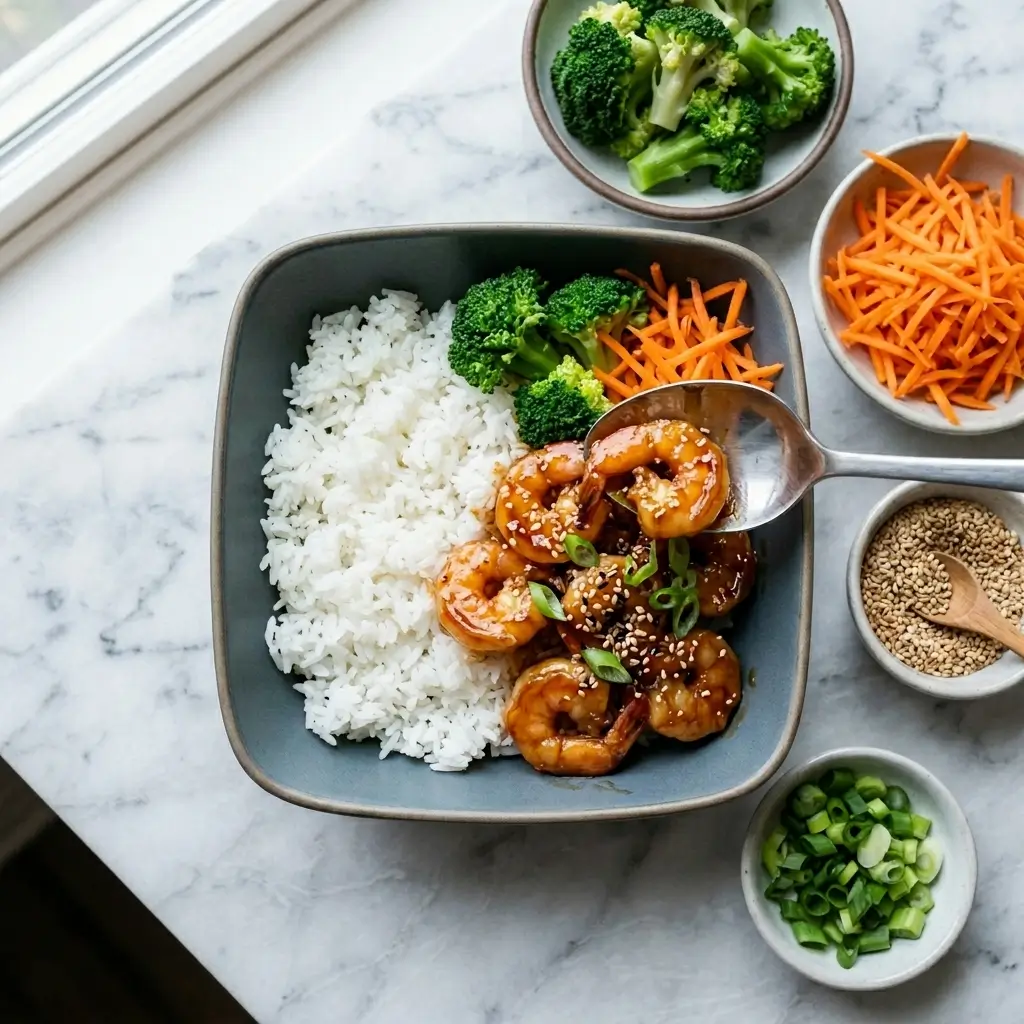
- Build your bowls. Rice on the bottom, shrimp on top, a handful of veggies alongside, and a sprinkle of sesame seeds and green onion to finish things off.
Pro Tips for Perfect Teriyaki Shrimp Every Time
After making this more times than I can count, I’ve picked up a few lessons the hard way.
Tip one: Don’t walk away from shrimp on the stove. I learned this the embarrassing way during one dinner when I got distracted answering a text and came back to shrimp that had gone from perfectly pink to little rubbery pencil erasers. Shrimp cook fast, like really fast, and that window between done and overdone is shorter than you’d think.
Tip two: Thicken your sauce off the heat for a few seconds before adding the shrimp back in. If the pan’s too hot, the sauce can scorch on the bottom and turn slightly bitter, which is not the flavor note you’re going for in a sweet teriyaki rice bowl.
Tip three, don’t overcrowd the pan. I get it, you want dinner faster, but cramming all the shrimp in at once means they steam instead of sear, and you lose that little caramelized edge that makes teriyaki shrimp so good. Cook in two batches if you need to; it’s worth the extra five minutes.
Tip four, add your garnishes right before serving, not after the bowl’s been sitting around. Sesame seeds lose their crunch, and green onions wilt fast once it hits warm sauce, and honestly, presentation matters more than I used to think it did.
Tasty Variations on This Seafood Rice Bowl
This seafood rice bowl is pretty flexible once you’ve got the basic method down.
Swap the shrimp for cubed salmon or even chicken thighs if shrimp isn’t what you’re in the mood for that week. Add pineapple chunks to the pan during the last minute of cooking for a sweeter, more tropical spin on the classic teriyaki shrimp bowl. If you like heat, a drizzle of sriracha or a spoonful of chili crisp on top wakes the whole bowl up.
For a lighter version, cauliflower rice and extra steamed vegetables cut the carbs without losing that cozy bowl feeling. Need it gluten-free? Swap the soy sauce for tamari or coconut aminos, and you’re set. And if you’re meal prepping for the week, this turns into a genuinely great shrimp meal prep bowl. Just keep the sauce slightly separate so things don’t turn soggy by day three.
Common Mistakes with Teriyaki Shrimp Rice Bowls (and How to Fix Them)
Sauce too thin? Let it simmer another minute or stir in a touch more cornstarch slurry, just a teaspoon at a time, so it doesn’t turn into shrimp-flavored glue.
The sauce turned out too thick, almost candy-like. Whisk in a splash of water or low-sodium broth to loosen it back up.
Shrimp turned out rubbery? That almost always means they cooked too long, or the pan wasn’t hot enough to begin with, so they spent more time in there than they should have. Get your skillet properly hot before the shrimp ever touch it, and pull them the moment they curl.
Rice came out mushy? You probably used a touch too much water, or skipped letting it rest with the lid on after cooking. Five extra minutes off the heat, lid still on, makes a bigger difference than people expect.
Out of brown sugar? Honey or maple syrup both work as a swap, though the flavor leans slightly different, a little more floral with honey, a touch deeper with maple.
Storage, Meal Prep, and Serving Ideas for Your Shrimp Rice Bowl
Leftovers keep well in an airtight container in the fridge for up to three days. Reheat gently in a skillet or microwave; shrimp can turn tough if you blast them on high heat for too long, so low and slow is the move here.
If you’re prepping this shrimp and rice recipe for the week ahead, store the rice, shrimp, and vegetables in separate containers and add the sauce just before eating. It keeps everything from turning into one soft, sauce-soaked mass by Thursday.
You can freeze the cooked shrimp and sauce separately for up to a month, though the rice is best made fresh since it tends to turn a little gummy after freezing and thawing.
For serving, I like a few avocado slices and a squeeze of lime on the side, plus extra green onion because apparently I can’t help myself. A fried egg on top turns it into a heartier dinner if you’re feeding someone with a bigger appetite. And if you love that shrimp-avocado combo, my grilled shrimp avocado bowl with mango salsa takes it to a whole other level.
Frequently Asked Questions About Teriyaki Shrimp Rice Bowls
Can I use frozen shrimp for this recipe?
Yes, frozen shrimp works great for this easy shrimp dinner. Just thaw them in the fridge overnight or run them under cool water for a few minutes if you’re short on time. Pat them very dry before cooking so they sear instead of steaming.
What’s the best rice for a teriyaki rice bowl?
Plain steamed white rice is classic, but brown rice, jasmine rice, or even cauliflower rice all work well. Pick whatever fits your week; the sauce and shrimp do most of the flavor work anyway.
Can I make the teriyaki sauce ahead of time?
Definitely. The sauce keeps in the fridge for about a week in a sealed jar. Just give it a quick reheat and a stir before tossing it with your shrimp.
Is this shrimp rice bowl recipe healthy?
It can be a genuinely healthy shrimp rice bowl, especially if you lean on brown rice, load up on vegetables, and go easy on added sugar in the sauce. Shrimp itself is lean and high in protein, so it’s a solid base for a balanced dinner.
How do I know when shrimp are fully cooked?
Look for that opaque pink-orange color and a loose “C” curl. If they’ve curled into a tight little “O,” they’ve gone past done into overcooked territory.
Can I double this recipe for a crowd?
Yes, just cook the shrimp in batches instead of all at once. Crowding the pan is the only real risk here; everything else scales up easily.
What can I substitute for soy sauce?
Coconut aminos or tamari both work well if you need a gluten-free or lower-sodium option, and they keep that same salty-savory base the sauce needs.
So tell me, what’s your go-to way to dress up a teriyaki shrimp rice bowl, extra crunchy veggies, a runny egg on top, or going all in on the spicy mayo drizzle? I’d love to hear how you make yours.

Easy Teriyaki Shrimp Rice Bowls
Ingredients
Equipment
Method
- Cook the rice according to package instructions. Fluff with a fork and keep warm until ready to serve.
- In a small saucepan, whisk together the soy sauce, brown sugar, garlic, ginger, and rice vinegar. Bring to a gentle simmer, then stir in the cornstarch mixed with water. Cook until the sauce becomes glossy and thick.
- Let the shrimp sit at room temperature for about 10 minutes, then pat them completely dry. Season lightly with salt and pepper.
- Heat a lightly oiled skillet over medium-high heat. Sear the shrimp for 60 to 90 seconds per side until pink, opaque, and lightly browned.
- Toss the cooked shrimp in the warm teriyaki sauce until evenly coated with the glaze.
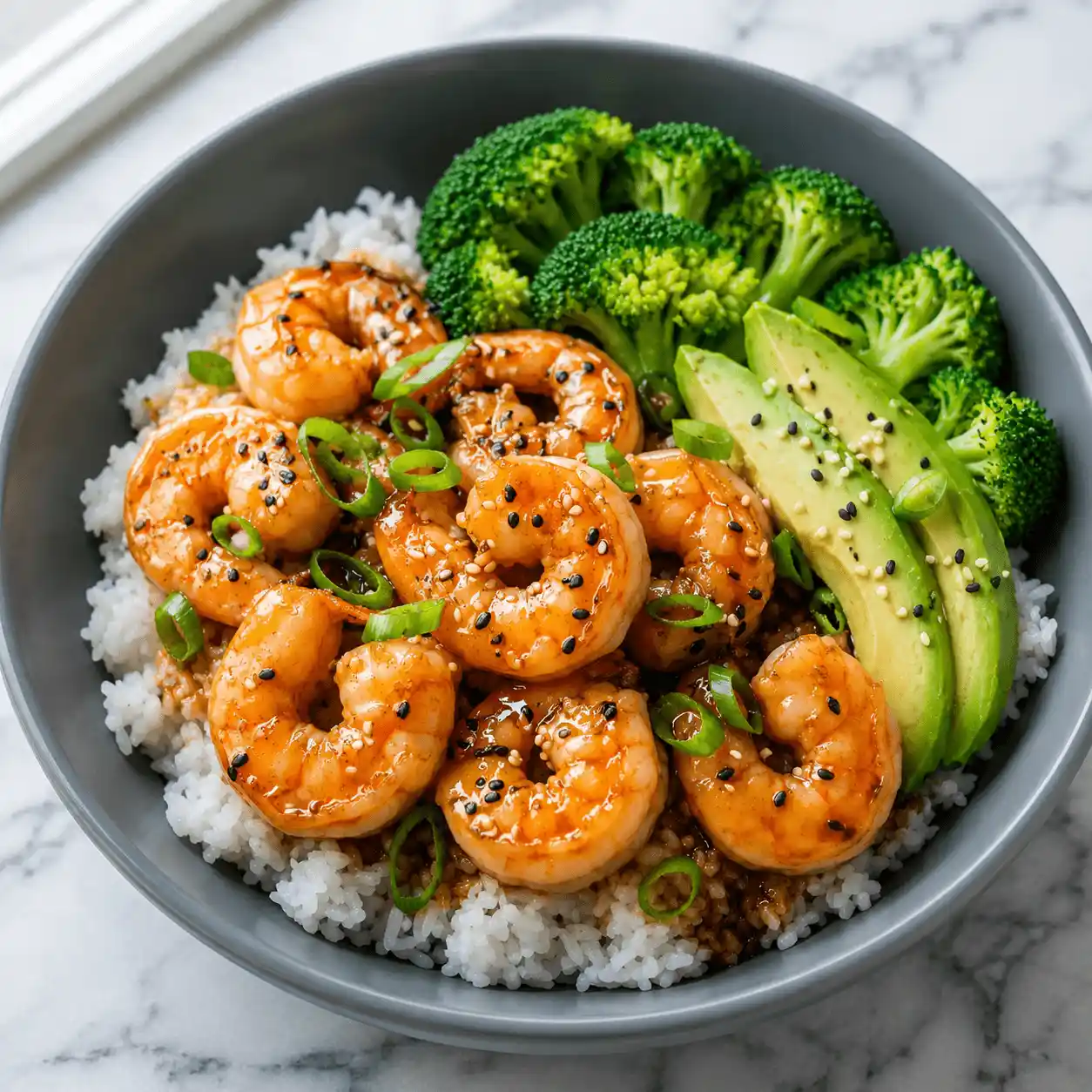
- Divide the rice among serving bowls. Top with teriyaki shrimp, vegetables, sesame seeds, and sliced green onions. Serve immediately.