
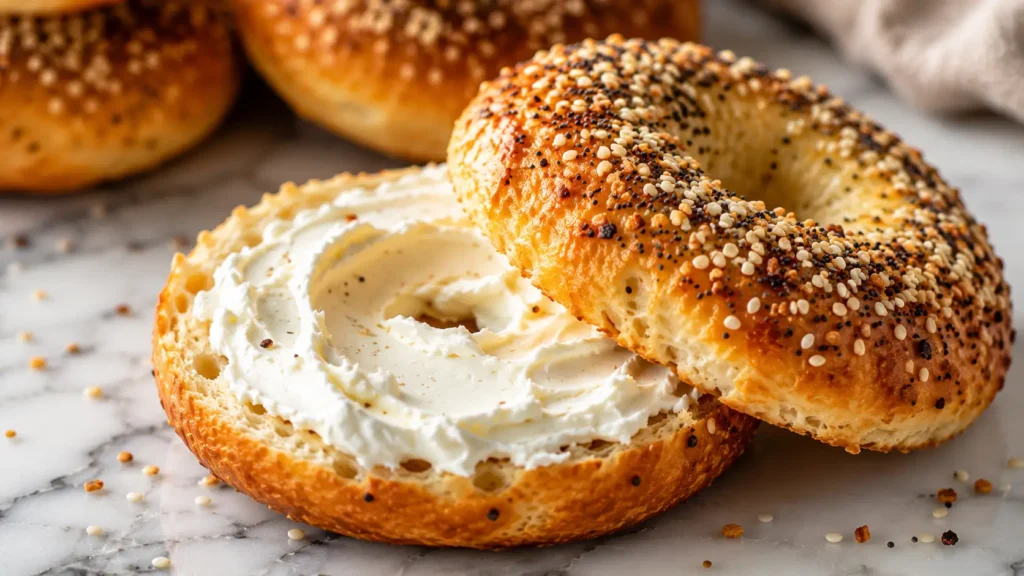
High protein cottage cheese bagels are about to become your new go-to breakfast, and I’ll be honest, the first time I tried making them I almost gave up halfway through. My dough was sticking to the counter, my hands looked like I’d been finger-painting with paste, and the only thing keeping me going was the smell of everything-bagel seasoning starting to toast in the oven. Twenty-some minutes later, I pulled out four golden, chewy bagels that tasted like something from an actual bakery, except each one was loaded with protein and took maybe ten minutes of real hands-on work. That’s the moment this recipe earned a permanent spot in my weekly rotation.
If you’ve already scrolled past a dozen versions of this recipe today, I get it, there’s a lot of cottage cheese bagel content floating around right now. But I’ve made this dough more times than I can count at this point, in my regular oven, in my air fryer, with self-rising flour, with plain flour and baking powder, and once with a gluten-free blend that’s a story for another day. What follows is the version that actually works, mistakes and all, so you don’t have to repeat the ones I made.
Why These High Protein Cottage Cheese Bagels Earned a Spot in My Kitchen
Traditional bagels are a whole production. Yeast, proofing, boiling, baking, basically half a day of waiting around for the dough to do its thing. These cottage cheese bagels skip almost all of that. No yeast, no rising time, no pot of boiling water on the stove. You blend, you mix, you shape, you bake (or air fry), and you’re eating warm bagels less than thirty minutes after you started.
What sold me, though, wasn’t just the speed. It’s the texture. Done right, the inside stays soft and a little pillowy while the outside gets that golden, slightly crisp shell that makes a bagel feel like a bagel. They smell incredible while baking too, warm and toasty, with whatever seasoning you’ve used perfuming the whole kitchen. For a high-protein breakfast that doesn’t taste like a punishment, this is genuinely one of my favorites.
Side thought, because I have to say it somewhere: I used to assume anything marketed as a “healthy bagel recipe” was going to taste like cardboard with delusions of grandeur. These don’t. They taste like bagels. Lighter, sure, and with a faint tang from the cottage cheese, but still a bagel. That tang is part of the charm once you get used to it.
The Simple Ingredients Behind This Recipe
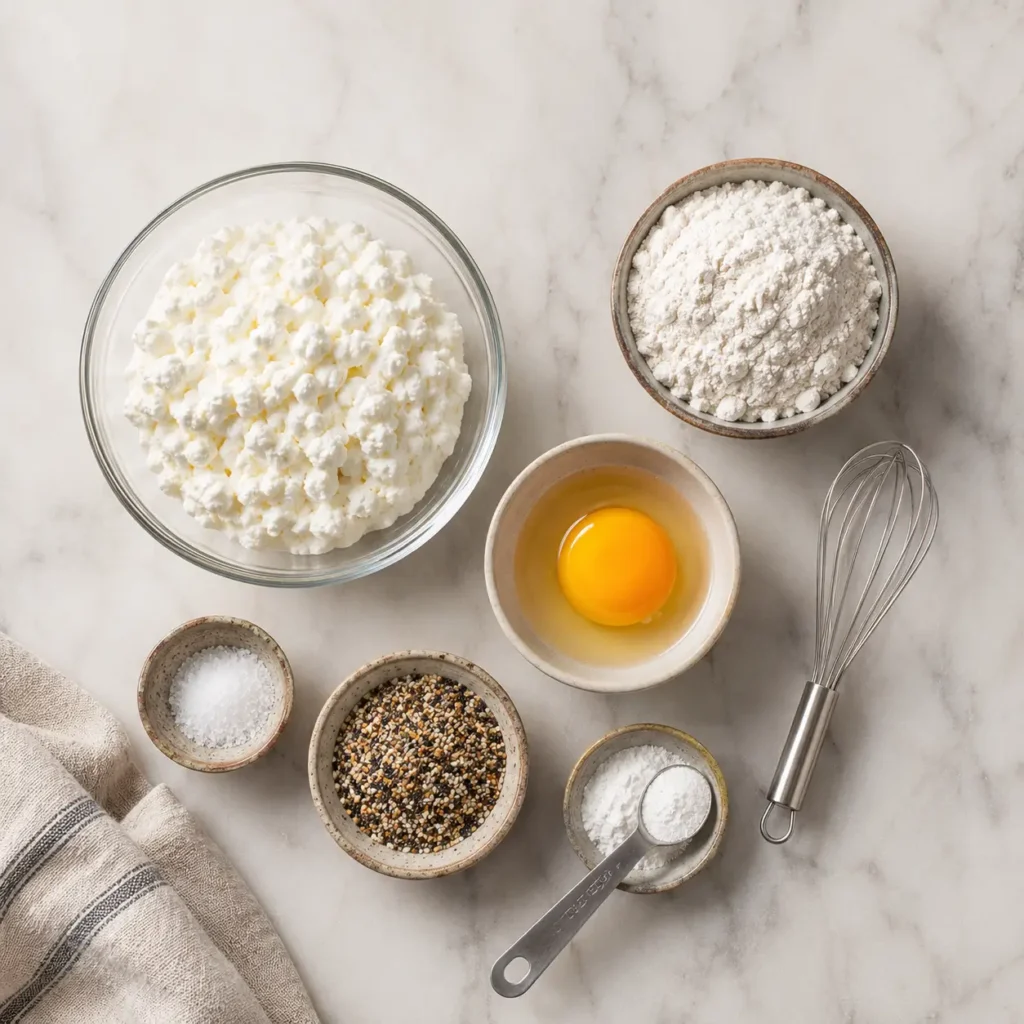
This is a short list on purpose. Part of why this cottage cheese bagel recipe works so well for busy mornings is that you’re not hunting down anything exotic.
- Cottage cheese – about 1 cup, full-fat or low-fat, both work, blended until completely smooth. This is your protein backbone and most of your moisture.
- Flour – 1 cup self-rising flour, or 1 cup all-purpose flour plus 1 teaspoon baking powder and a pinch of salt if you don’t keep self-rising on hand.
- One egg – beaten, used as an egg wash so the seasoning actually sticks and the crust turns that deep golden color.
- Salt – just a pinch if your flour blend doesn’t already include it.
- Toppings – everything bagel seasoning, sesame seeds, flaky salt, or whatever you’ve got. This part is honestly the fun part.
That’s it. Four real ingredients and a topping of your choice, and you’ve got the base for some seriously good protein bagels.
How to Make Cottage Cheese Bagels, Step by Step
Blending the Batter
Dump your cottage cheese into a blender or food processor and run it until every curd disappears. I mean every single one. The first time I made this, I got impatient, figured “close enough” was good enough, and left tiny lumps in there. The result was a bagel with weird little pockets that baked into slightly rubbery spots. Lesson learned: blend it longer than feels necessary. You’re going for something that looks closer to ricotta or thick yogurt, no visible curd texture at all.
Shaping the Bagels
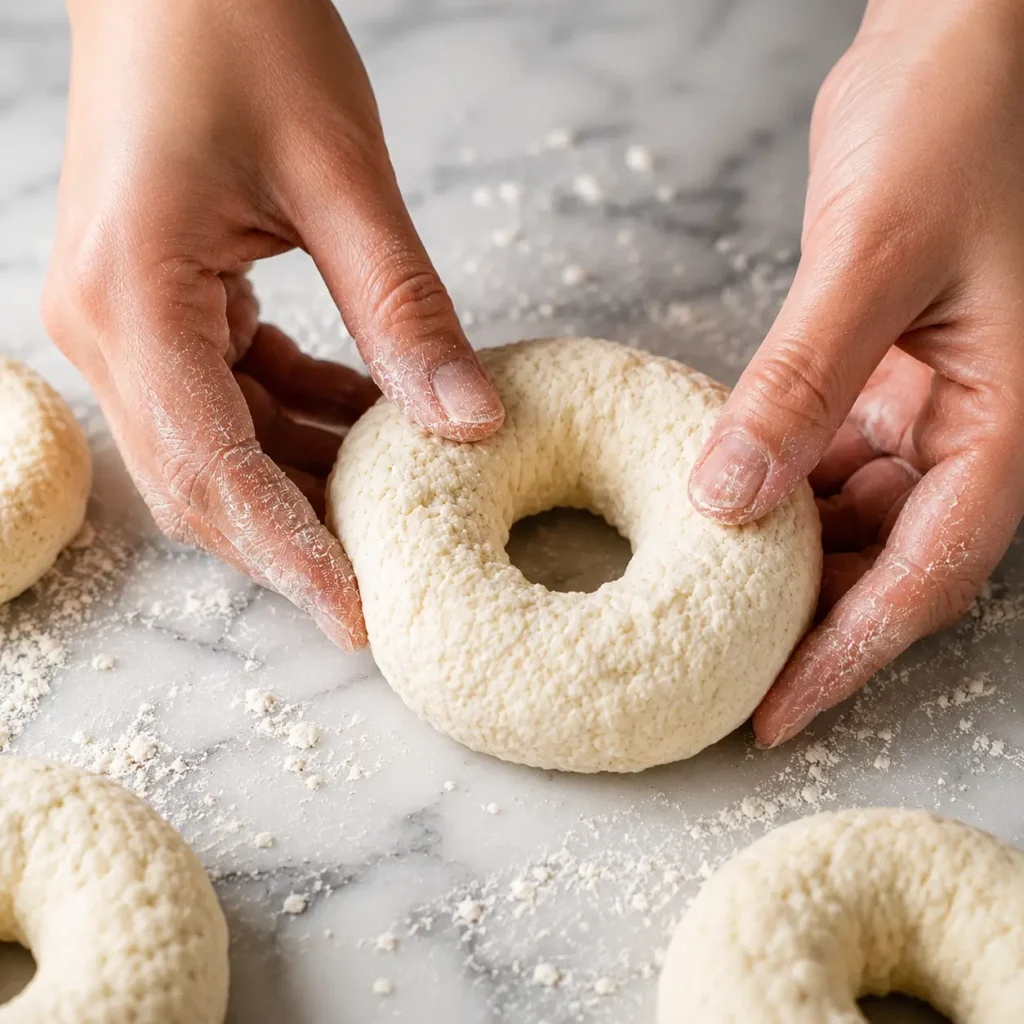
Fold your smooth cottage cheese into the flour until a shaggy, slightly sticky dough forms. It won’t look like much at this stage, kind of pale and a little ragged, and that’s completely normal. Divide it into four pieces, roll each into a short log, and either join the ends into a ring or poke a hole through a ball of dough with your finger. Brush each one generously with the beaten egg, then sprinkle on your seasoning while the egg is still wet so it actually stays put.
Baking or Air Frying
For oven-baked cottage cheese bagels, set your oven to 350°F and bake for 25 to 28 minutes, until the tops are deeply golden and a little crackly. If you’re going the air fryer cottage cheese bagels route, drop the temperature to around 320°F and air fry for 12 to 14 minutes, flipping halfway through so both sides color evenly. The air fryer version comes out with a slightly crisper shell; the oven version bakes a bit more evenly all the way around. Both are good. I genuinely switch between the two depending on my mood, and maybe on whether I feel like preheating a full oven for four bagels.
Pro Tips I Wish Someone Had Told Me Sooner
Drain your cottage cheese first if it looks watery. Some brands are looser than others, and extra liquid means a denser, gummier crumb. A quick few minutes in a fine strainer fixes this before you even hit the blender.
Don’t skip the egg wash, even though it feels optional. I tried once without it, mostly out of laziness, and the seasoning slid right off the second the bagels cooled. The egg wash isn’t just for color; it’s basically glue.
Let them rest for five minutes before slicing. Cutting into a hot bagel straight out of the oven gives you a gummy, slightly underdone-feeling crumb, even when it’s fully cooked. A short rest lets the inside finish setting up, and suddenly the texture is exactly right.
One more, because I keep relearning it the hard way: don’t overwork the dough once the flour goes in. Mix just until it comes together. Overmixing makes these tougher than they need to be, and tough was never the goal here.
Easy Variations and Substitutions
Once you’ve made this easy homemade bagel base a couple of times, it’s easy to start playing around. Swap self-rising flour for whole wheat for a heartier, nuttier bite, just know the texture gets a bit denser. A gluten-free 1:1 blend works in a pinch, too, though mine turned out slightly more crumbly, still tasty, just handle the dough gently.
Want even more protein bagel energy? Stir a tablespoon of unflavored or vanilla protein powder into the dry mix, and reduce the flour very slightly to compensate. For a sweeter version, skip the savory toppings, add a teaspoon of cinnamon and a touch of honey to the dough, and top with a light cinnamon-sugar dusting instead.
If cottage cheese genuinely isn’t your thing, plain Greek yogurt can stand in, though the bagels end up a touch less rich and slightly tangier. It works, it’s just a different bagel, not necessarily a worse one.
Where This Recipe Can Go Sideways (and How to Fix It)
Dense, gummy texture almost always traces back to one of two things: unblended cottage cheese curds, or dough that’s too wet. If your batter still looks lumpy after blending, keep going. If your dough feels more like batter than dough, add flour a tablespoon at a time until it actually holds a shape.
Flat, spread-out bagels that look more like hockey pucks than bagels, and yes, I’ve absolutely been there, usually mean the dough was too soft to hold its ring shape. Popping the shaped dough in the fridge for ten minutes before baking firms things up and helps them hold their form in the oven.
Bland bagels usually just need more salt or a heavier hand with the seasoning. And if your topping keeps falling off after baking, go back to that egg wash tip; it’s rarely optional, no matter how tempting it is to skip.
Storing, Reheating, and Serving Ideas
Once fully cooled, these keep in an airtight container in the fridge for three to four days. For longer storage, slice them in half first, then freeze for up to two months. That way, you can pop a half straight into the toaster without thawing the whole thing first.
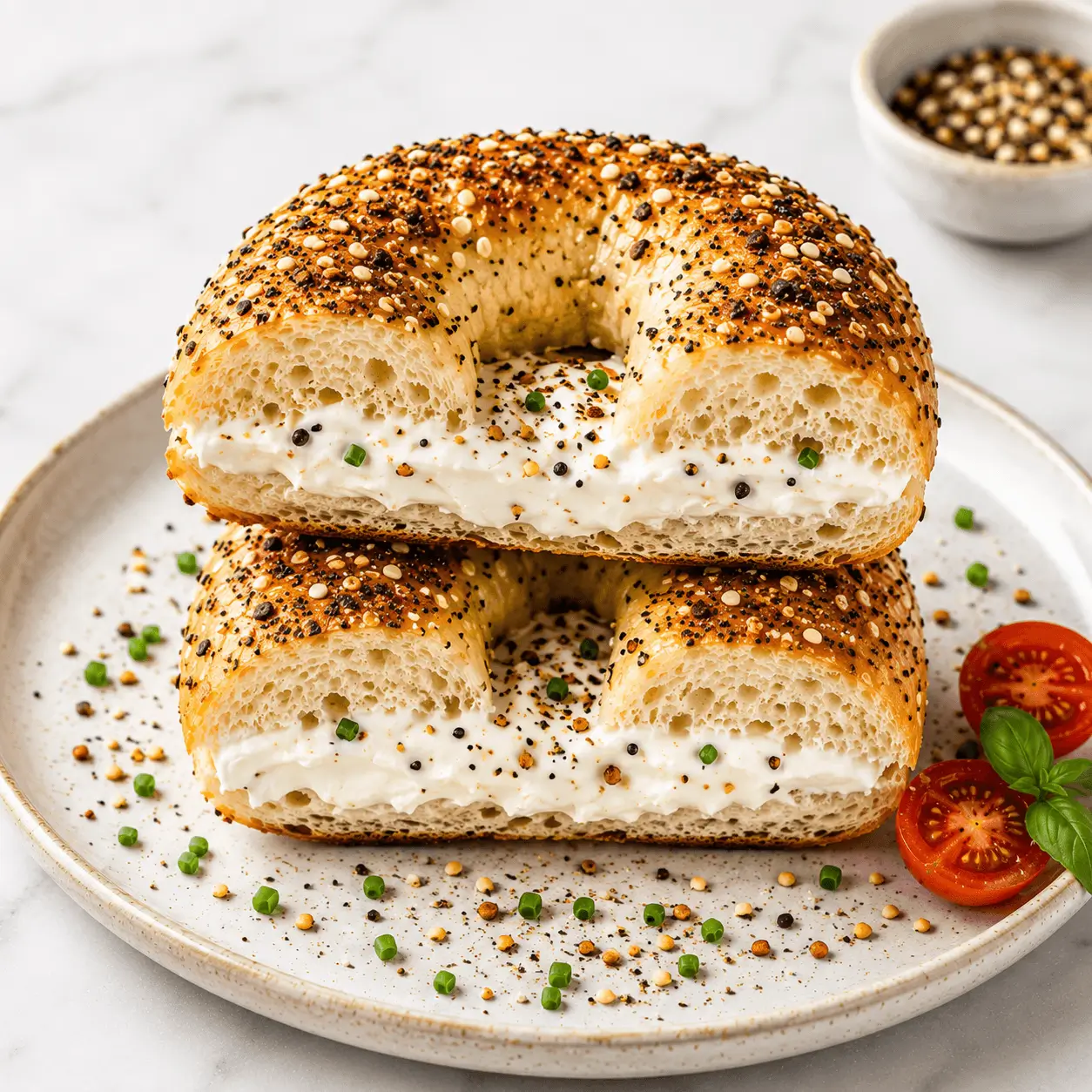
To reheat, a few minutes in the toaster or air fryer brings back that crisp exterior far better than a microwave ever could. Top with cream cheese and smoked salmon for something fancier, or keep it simple with peanut butter and banana, scrambled eggs and avocado, or just a thick smear of butter while it’s still warm. Any of these makes for a solid cottage cheese breakfast that actually keeps you full until lunch.
Frequently Asked Questions
What does cottage cheese actually do in this recipe?
It replaces most of the fat, yeast, and liquid you’d normally need for bagel dough, while adding a solid hit of protein and a slightly tangy flavor. Blended smoothly, it behaves almost like a thick batter base.
Can I make these without a blender or food processor?
You can try mashing cottage cheese very thoroughly with a fork, but expect some texture from leftover curds. A blender or small food processor genuinely makes a noticeable difference here.
Why did my bagels turn out gummy or dense?
Most often, it’s unblended curds or a dough that’s too wet. Blend longer, and don’t be afraid to add a touch more flour if the dough feels closer to batter than dough.
Can I air fry these instead of baking them in the oven?
Yes, and a lot of people prefer it. Air fry at around 320°F for 12 to 14 minutes, flipping halfway through for even color on both sides.
How much protein is actually in one of these bagels?
It varies depending on your exact brand of cottage cheese and flour, but you’re typically looking at somewhere around 10 to 14 grams of protein per bagel, noticeably higher than a standard bakery bagel.
Can I freeze cottage cheese bagels?
Definitely. Slice them first, then freeze in an airtight bag for up to two months. Toast straight from frozen for the best texture.
What’s the best flour for this recipe?
Self-rising flour is the easiest option since it already has the leavening built in. All-purpose flour with added baking powder works just as well if that’s what you have on hand.
So, now that you’ve got the full rundown, the wins and the slightly flattened, hockey-puck-shaped mishaps included, I’m curious where you land. Are you Team Oven, Team Air Fryer, or are you about to make both batches just to settle the debate yourself?

High Protein Cottage Cheese Bagels
Ingredients
Equipment
Method
- Blend the cottage cheese in a blender or food processor until completely smooth with no visible curds.
- Mix the blended cottage cheese with the flour (and baking powder plus salt if using all-purpose flour) until a shaggy, slightly sticky dough forms. Do not overmix.
- Divide the dough into 4 equal pieces. Roll each into a rope and join the ends to form a bagel, or poke a hole through a dough ball to create the center.
- Brush each bagel generously with beaten egg and sprinkle with your preferred seasoning.
- Bake at 350°F (175°C) for 25–28 minutes until deeply golden, or air fry at 320°F for 12–14 minutes, flipping halfway through.
- Let the bagels cool for 5 minutes before slicing and serving.