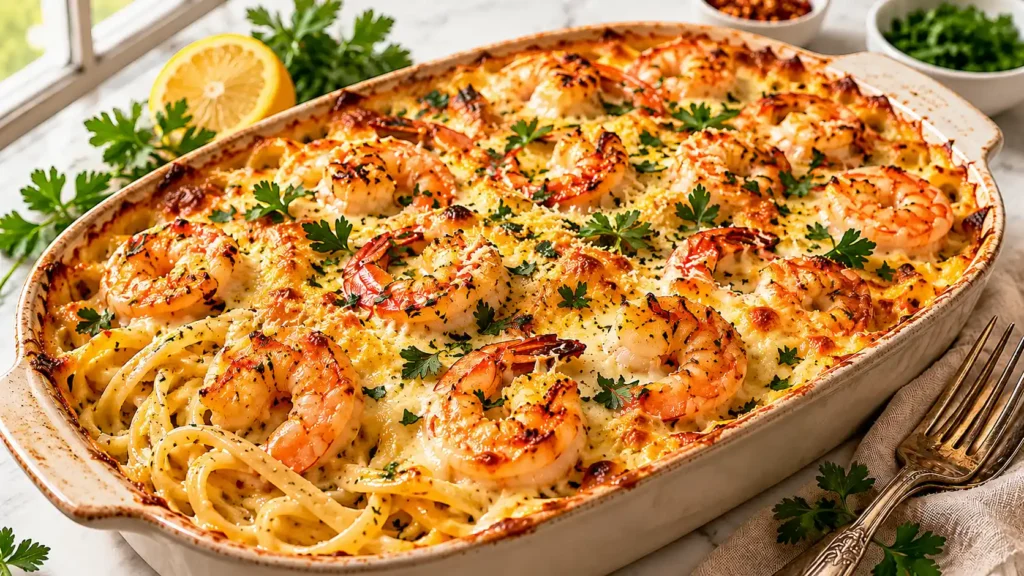
I’ll be honest with you — this Shrimp Scampi Pasta bake almost didn’t happen. I had a pound of shrimp defrosting in the fridge, half a box of linguine in the pantry, and absolutely zero desire to stand at the stove for an hour. It was one of those Tuesday nights where the couch was calling louder than the kitchen. But I’d been thinking about a baked version of shrimp scampi for weeks — the idea of all that garlicky, buttery goodness locked under a golden cheese crust — and I figured, if not tonight, when?
Thirty-five minutes later, my kitchen smelled incredible. That warm, rich scent of butter, garlic, and toasted Parmesan hitting the oven? Honestly, it should be a candle. My partner wandered in from the living room without being called. That’s usually how I know a recipe is a winner.
This dish sits right at the intersection of two things I love: the bright, restaurant-style flavor of classic shrimp scampi and the cozy, low-effort comfort of a baked pasta casserole. It’s an easy seafood dinner that genuinely tastes as if you tried harder than you did — and that’s exactly the kind of recipe I’m here for.
Why This Recipe Just Works
Most shrimp scampi recipes are stove-top only — you toss everything in a pan and serve immediately. That’s great, but it means you’re plating and rushing all at once. Baking it changes the whole experience. The pasta absorbs the sauce as it bakes, the shrimp stay juicy because they go in at the right moment, and the cheese on top develops this gorgeous, slightly crispy edge that you cannot get any other way.
It also means you can assemble this earlier in the day, stick it in the fridge, and bake it when you’re ready. That alone makes it one of the more practical shrimp recipes for dinner in my rotation — especially when I want something that feels elevated without demanding my full attention at 6 PM.
The lemon is non-negotiable, by the way. Both the zest and the juice. The zest in particular gives the sauce this floral citrus note that cuts right through the richness of the cream and butter. Without it, the dish can taste a little flat, even when everything else is right. Don’t skip it.
The Ingredients — and Why Each One Matters
Here’s what you’ll need to make this shrimp scampi pasta bake from scratch. Nothing fancy, nothing hard to find — just a solid lineup of ingredients that work really well together.
- 12 oz linguine or spaghetti — Long pasta works better here than short shapes. It tangles into the sauce beautifully and holds up in the oven without turning mushy.
- 1 lb large shrimp, peeled and deveined — Fresh or frozen, both work. If using frozen, thaw completely and pat dry before cooking. Wet shrimp will water down your sauce.
- 4 tablespoons unsalted butter — The base of the sauce. Unsalted gives you better control over the final flavor.
- 4 garlic cloves, minced — Don’t skimp here. Garlic is the soul of this dish. Freshly minced is noticeably better than jarred.
- ¼ teaspoon red pepper flakes — Adds a subtle background heat that makes the whole sauce taste more complex.
- ½ cup dry white wine or chicken broth — The wine deglazes the pan and adds depth. If you’d rather skip alcohol, chicken broth works just fine.
- 1 lemon, juiced and zested — Both parts, as mentioned above. Trust me on this.
- 1 cup heavy cream — Makes the sauce silky and rich without being too thick.
- ½ cup grated Parmesan — Goes into the sauce and on top. Freshly grated melts and flavors far better than pre-packaged.
- 1 cup shredded mozzarella — The melty, bubbly topping that makes this a proper pasta bake.
- Salt and black pepper to taste
- 2 tablespoons fresh flat-leaf parsley, chopped — For garnish and a little brightness at the end.
Ingredient Substitutions Worth Knowing
No heavy cream in the house? A mix of whole milk and a tablespoon of cream cheese gets you surprisingly close. For a slightly lighter version, half-and-half works too — just know the sauce will be a bit thinner, so let it simmer a little longer before combining with the pasta.
Mozzarella can be swapped for provolone or fontina if you want a sharper, more interesting melt. Pecorino Romano instead of Parmesan gives the whole dish a saltier, funkier edge — really good if you like bold flavor.
And if shrimp isn’t your thing — or you just want to stretch the dish further — scallops are an excellent addition. So are chunks of firm white fish like cod or halibut. This base sauce is genuinely versatile enough to handle different kinds of seafood dish recipes without much adjustment.
How to Make Shrimp Scampi Pasta Bake (Step by Step)
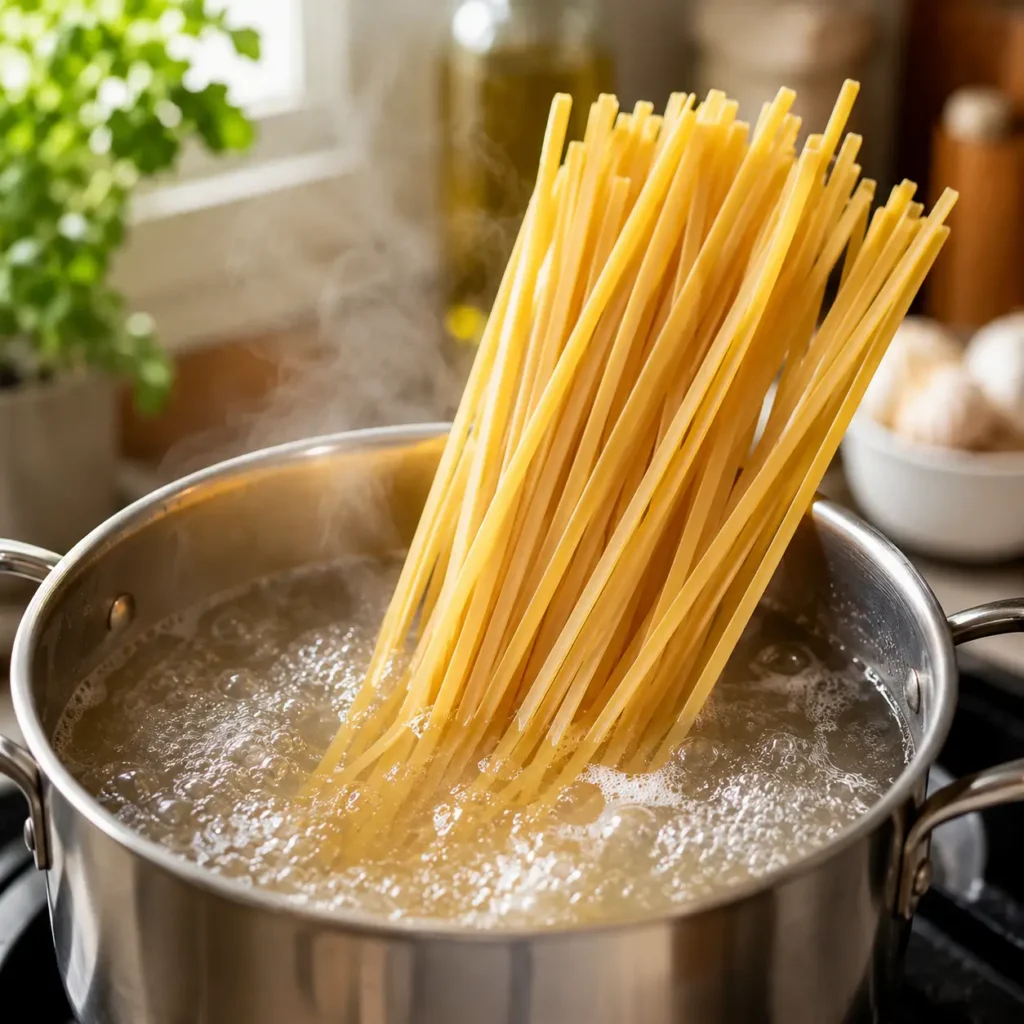
Step 1 — Preheat and prep. Set your oven to 375°F (190°C). Get a large pot of salted water boiling for the pasta.
Step 2 — Cook the pasta al dente. Cook your linguine 2 minutes less than the package directions. It’ll finish cooking in the oven, and if it’s already fully done when it goes in, you’ll end up with something soft and sorry-looking. Drain it, toss with a tiny drizzle of olive oil so it doesn’t stick, and set aside.
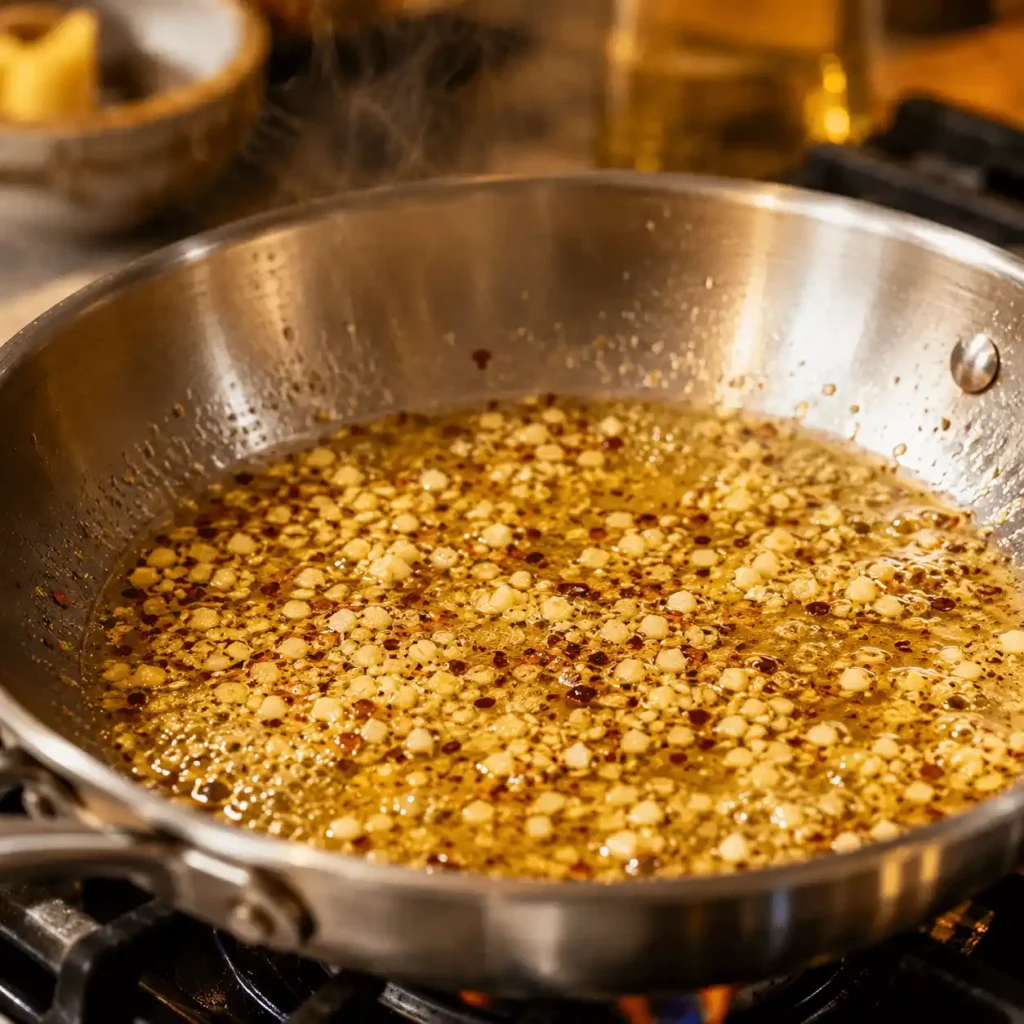
Step 3 — Sauté the garlic. In a large oven-safe skillet (or a regular skillet if you’ll be transferring to a baking dish), melt butter over medium heat. Add the garlic and red pepper flakes. Cook for about 1 minute — just until fragrant. The moment the garlic turns golden, pull back the heat. Burnt garlic will ruin everything, and I say that from personal experience.
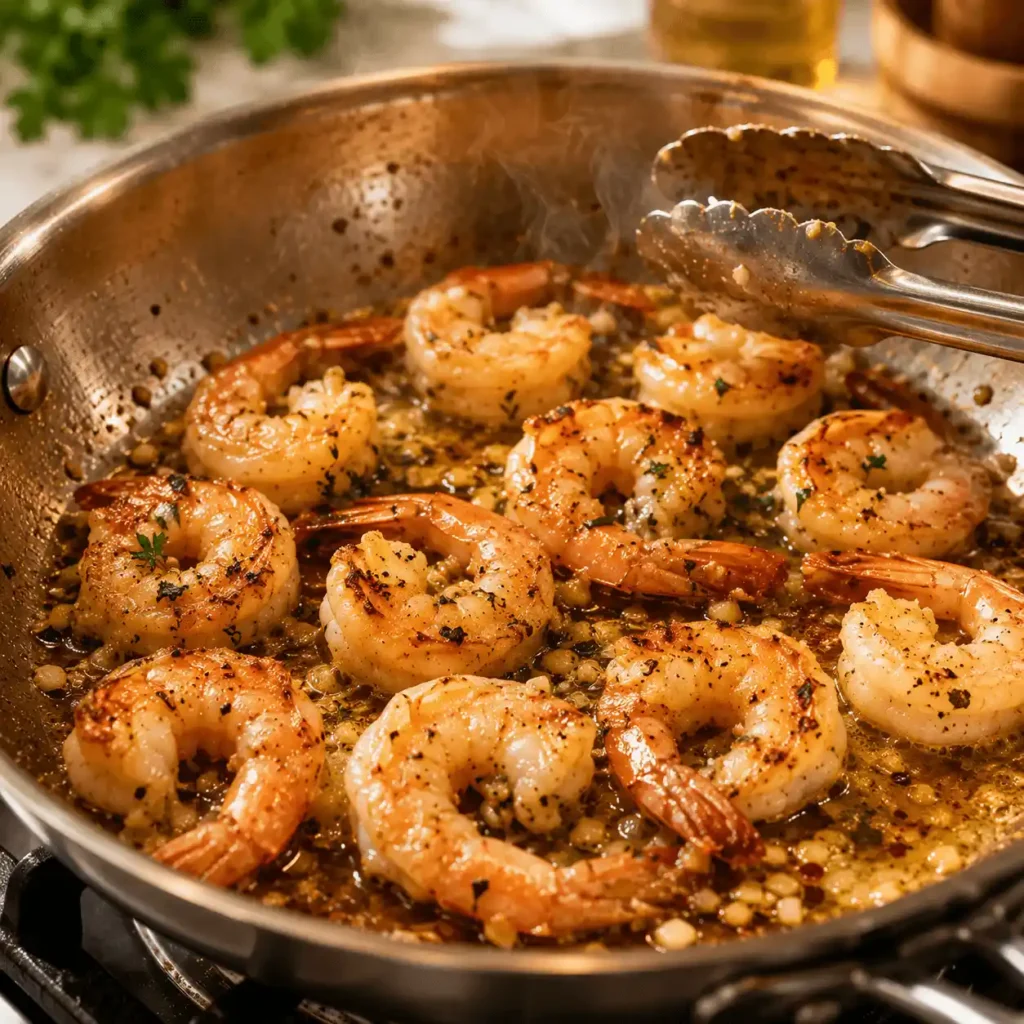
Step 4 — Cook the shrimp briefly. Add the shrimp in a single layer. Cook 1 to 2 minutes per side, just until they’re barely pink. Remove them from the pan and set aside. They’re not done yet — they’ll finish in the oven — so resist the urge to fully cook them here, or they’ll be rubbery by the time the dish comes out.
Step 5 — Build the sauce. Pour the white wine into the hot skillet and let it bubble for 2 minutes, scraping up any browned bits from the bottom. Add the lemon juice, lemon zest, and heavy cream. Let everything simmer together for 3 to 4 minutes until slightly thickened. Stir in half the Parmesan. Taste and adjust the salt and pepper.
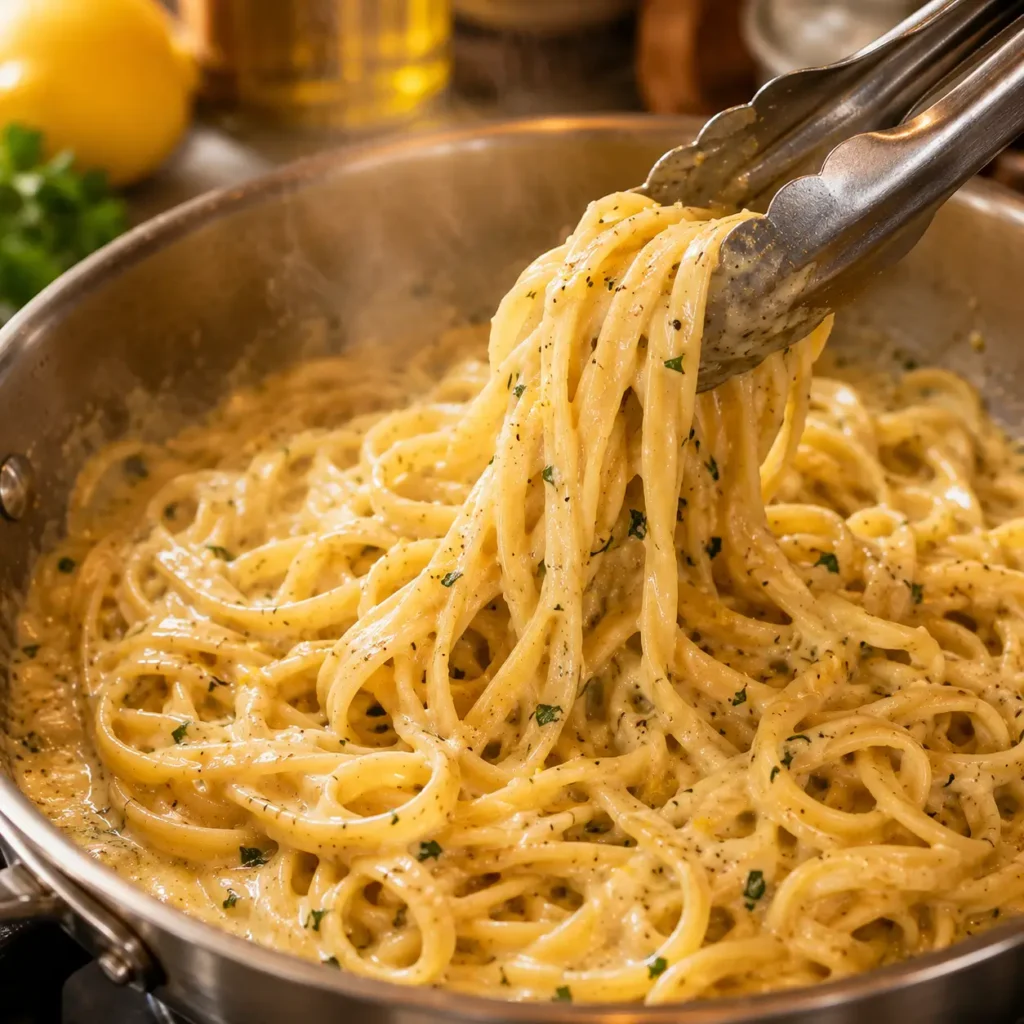
Step 6 — Combine. Add the cooked pasta to the sauce and toss well to coat every strand. If you’re using an oven-safe skillet, great — just arrange the shrimp on top right in the pan. Otherwise, transfer the sauced pasta to a greased 9×13 baking dish and nestle the shrimp in and around the pasta.
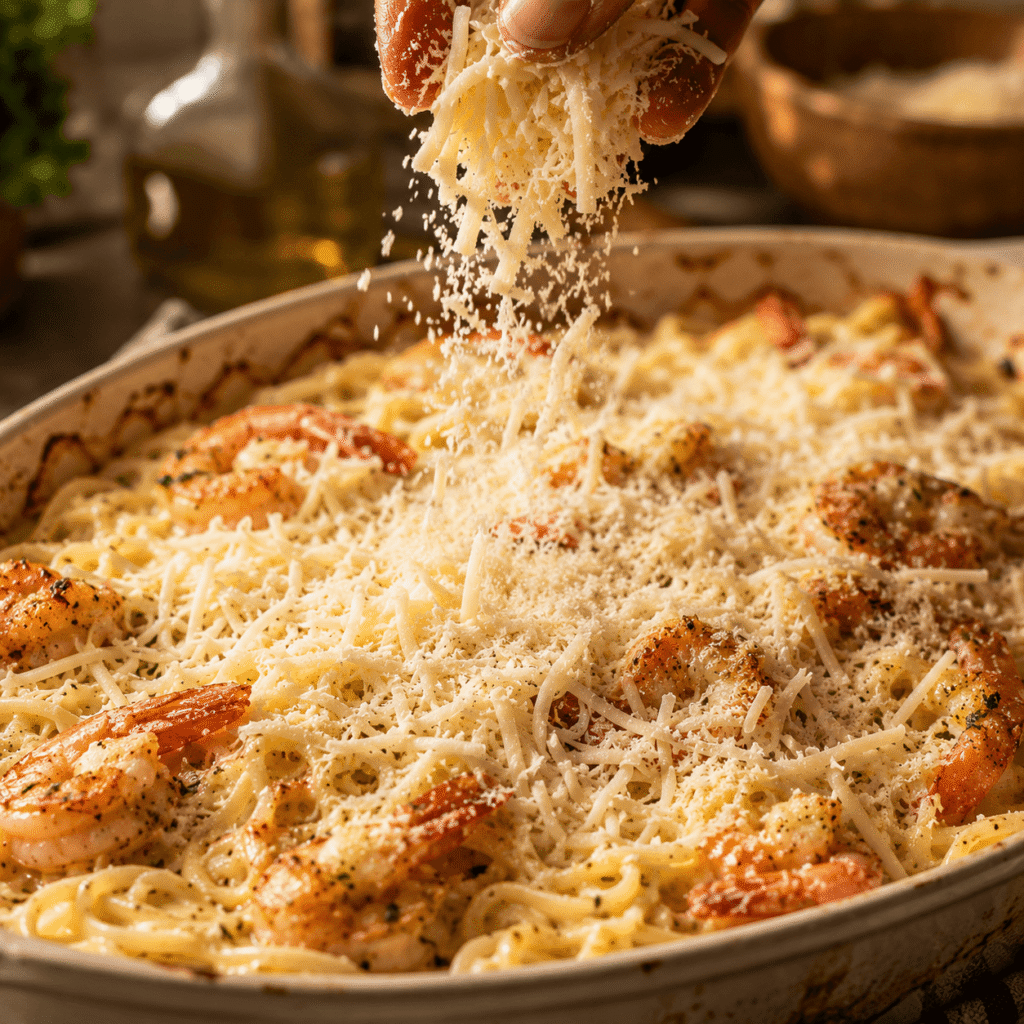
Step 7 — Top with cheese. Scatter the remaining Parmesan and all the mozzarella over the top. Don’t be shy about coverage — you want a proper golden crust, not a sparse dusting.
Step 8 — Bake. Into the oven for 15 to 20 minutes, until the cheese is fully melted, bubbling at the edges, and starting to turn golden brown in spots. If you want a little more color on top, hit it under the broiler for 2 minutes at the end. Keep a close eye on it — the difference between golden and burnt is about 90 seconds under a broiler.
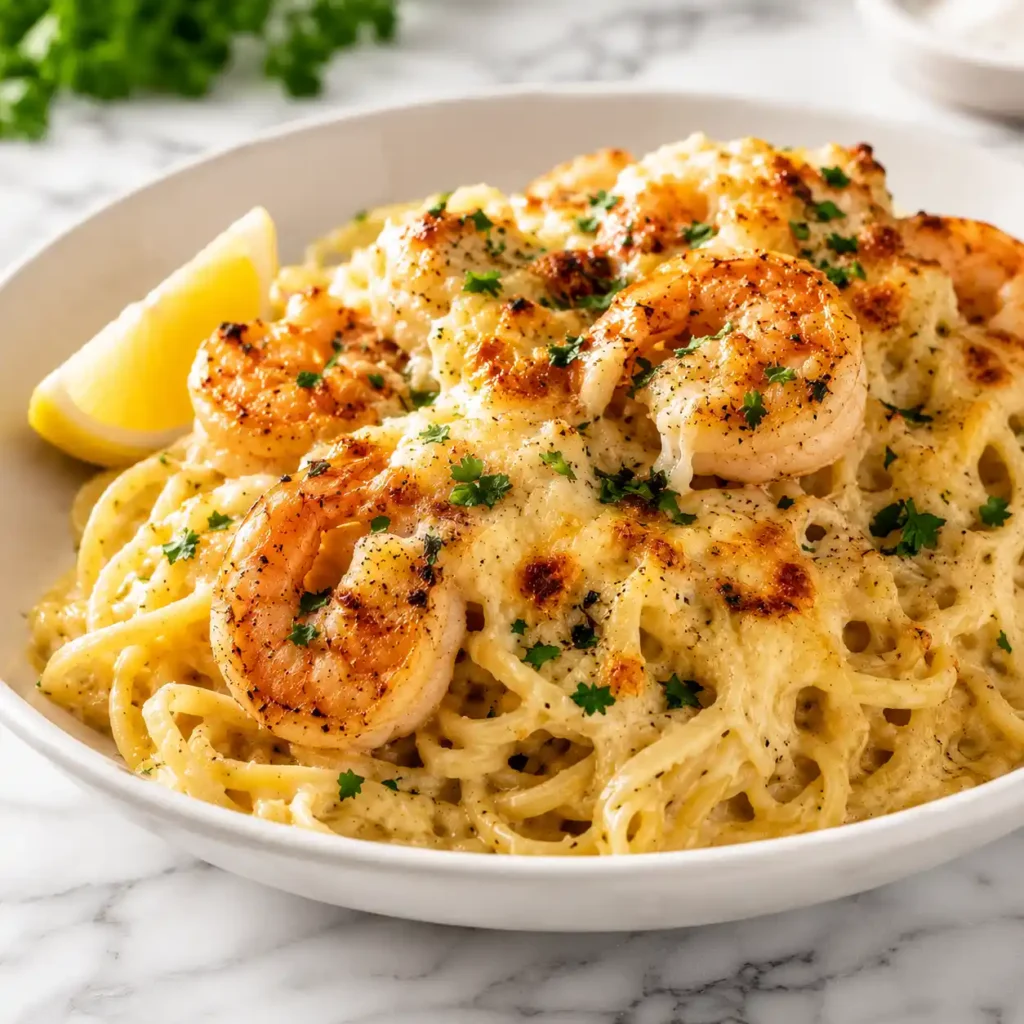
Step 9 — Rest and serve. Let it sit for 5 minutes before serving. Finish with fresh chopped parsley. That bit of green does more than look pretty — it adds a pop of freshness that balances the richness really well.
Pro Tips From My Kitchen (Learn From My Mistakes)
Dry your shrimp thoroughly. Seriously, this one matters more than people realize. Pat them dry with paper towels before they go in the pan. Moisture on the surface of the shrimp will cause them to steam instead of sear, and you’ll lose all that lovely browning that adds flavor to the sauce. I learned this the hard way after a batch came out pale and bland. Dry shrimp, better dish.
Don’t overcrowd the pan when cooking shrimp. If your skillet isn’t big enough, do it in two batches. Overcrowding drops the pan temperature, and instead of a quick sear, you end up with shrimp sitting in liquid. Same issue as above — no color, less flavor. It adds maybe 3 minutes to the process. Worth it.
Add the shrimp on top, not buried underneath. When assembling the baking dish, resist the temptation to mix the shrimp into the pasta. Laying them on top means they get just the right amount of oven heat — enough to finish cooking without becoming rubbery. If they’re buried in hot pasta and covered in cheese, they’ll overcook every time.
Pull the dish when the cheese looks glossy, not deeply browned. The pasta is already cooked, and the shrimp are mostly done. You’re really just there for the cheese. Glossy and bubbly is the goal. Deep brown means the shrimp have been in too long. Use the broiler at the very end if you want more color — it’s faster and more controlled.
Easy Variations to Make It Your Own
This is one of those easy pasta recipes that responds really well to customization. Here are the tweaks I’ve tested and actually liked.
Add Vegetables
Halved cherry tomatoes tucked into the pasta before baking burst and add a lovely sweetness. Baby spinach wilted into the sauce just before combining is another easy win. Asparagus cut into small pieces also works — roast it separately for 10 minutes first, then fold it in. Artichoke hearts (the kind from a jar, drained) are underrated here and add a savory depth that goes beautifully with the garlic-lemon flavor profile.
Make It Spicier
Double the red pepper flakes, or add a pinch of Cajun seasoning to the shrimp before they hit the pan. This turns it into more of a Southern-influenced seafood dish with a real kick. Really good if you like heat.
Gluten-Free Version
Use your preferred gluten-free pasta — brown rice linguine holds up pretty well in the oven. Everything else in this recipe is naturally gluten-free, so no other substitutions are needed.
Low-Carb Swap
Zucchini noodles won’t hold up the same way in the oven (they release too much moisture), but spaghetti squash works surprisingly well. Roast it first, scrape the strands, and use it in place of pasta. The sauce clings to it differently, but the overall result is still really satisfying.
Mix Up the Protein
One of my favorite riffs on this is a mix of shrimp and scallops — half and half. The scallops add this rich, almost sweet contrast that elevates the dish in a way that feels genuinely restaurant-worthy. Chunks of lobster, if you’re feeling indulgent, are also incredible here. This is, after all, a seafood dinner that can go as fancy or as casual as you want it to.
Troubleshooting: When Things Go Sideways
Sauce too thin? Let the cream simmer a few extra minutes before adding the pasta. You can also stir in a small handful of extra Parmesan — it thickens and flavors at the same time. If the sauce still feels loose when you combine it with the pasta, don’t panic. The pasta will absorb quite a bit of liquid as it bakes.
Pasta too dry after baking? This usually happens when the pasta was a little overdone before it went in the oven, or there wasn’t quite enough sauce. Next time, undercook the pasta by a full 2 to 3 minutes and add a splash more cream to the sauce. You can also drizzle a little pasta water over the assembled dish before it goes in the oven — just 2 or 3 tablespoons, it helps.
Shrimp rubbery? They were overcooked before or during baking. Remember: barely pink in the skillet, on top of the pasta in the dish, and only 15 to 20 minutes in the oven. If your oven runs hot, check at the 12-minute mark.
Cheese not browning? Your oven temp might be a little low, or the cheese layer was too thin. Use the broiler for a quick blast at the end. And make sure you’re using a good amount of mozzarella — it’s what creates that golden, bubbly crust. Don’t ration it.
Storage, Leftovers & What to Serve Alongside
Storing Leftovers
Leftovers keep well in an airtight container in the fridge for up to 3 days. The pasta will absorb more sauce as it sits, so when reheating, add a small splash of water or cream to loosen things up. Cover with a damp paper towel if reheating in the microwave — it keeps the shrimp from turning dry.
For the freezer: technically possible, but shrimp don’t freeze particularly well once cooked. The texture gets a little grainy on the reheat. If you want to prep ahead for the freezer, make the pasta and sauce, freeze that separately, and add fresh shrimp when you bake it. That’s the better approach.
Make-Ahead Option
Assemble the entire dish up to 24 hours in advance, cover tightly, and refrigerate. When you’re ready, take it out 20 minutes before baking to take the chill off, then bake as directed. You might need 5 extra minutes in the oven since it’s starting cold.
What to Serve With It
A crisp green salad with a sharp vinaigrette cuts through the richness nicely. Garlic bread on the side is almost mandatory — you’ll want something to catch the sauce that doesn’t make it onto a fork. A glass of dry white wine (Pinot Grigio, Sauvignon Blanc, or Vermentino) echoes the flavors in the dish and rounds the whole meal out perfectly. This is the kind of shrimp dish that feels effortlessly complete with very little effort on the sides.
Frequently Asked Questions
Can I use pre-cooked shrimp for this shrimp scampi pasta?
You can, but skip the skillet step entirely. Just add the cooked shrimp directly on top of the pasta before baking, and pull the dish from the oven as soon as the cheese is melted — about 10 minutes. Pre-cooked shrimp need heat to warm through, not to cook, so they’ll go rubbery fast if you overdo it.
What’s the best pasta shape for a shrimp scampi pasta bake?
Long pasta — linguine, spaghetti, or fettuccine — works best here. It soaks up the sauce evenly and bakes well without becoming gummy. Short pasta like penne or rigatoni can work too, but the texture ends up a little different. I’ve tried it both ways and almost always reach for linguine.
Can I make this without wine?
Absolutely. Just substitute the white wine with an equal amount of chicken broth, and add an extra squeeze of lemon to compensate for the brightness the wine would have contributed. The dish will still taste great — the difference is subtle.
How do I know when the shrimp are done without overcooking them?
In the skillet, they’re ready when they’re just barely opaque and pink — about 1 to 2 minutes per side over medium heat. They’ll curl into a loose “C” shape when done. An overly tight curl (a closed “O”) means they’ve gone too far. In the oven, the residual heat finishes the job, which is why pulling them early in the skillet is key.
Is this a good recipe for meal prep or feeding a crowd?
One of the best. The recipe as written serves about 6 people generously. You can easily double it across two baking dishes. It also reheats well enough that individual portions work for lunch the next day — just add that splash of cream or water before reheating, and you’re good.
Can I use frozen shrimp?
Yes — frozen shrimp is how most of us cook anyway. The most important thing is to thaw them fully (run cold water over them in a colander for about 10 minutes) and pat them completely dry before they go in the skillet. That’s where moisture becomes a problem, and dry shrimp cook far better than wet ones.
What can I do if I don’t eat seafood?
The sauce and bake technique is genuinely excellent with other proteins. Sliced chicken breast, sautéed and seasoned similarly, fits right in. Chickpeas work well for a vegetarian version — toast them in the butter-garlic base until slightly crispy before combining. The flavor profile of the dish stays intact with either swap.
Eight years of cooking for this blog, and recipes like this one still remind me why I love being in the kitchen. There’s something genuinely satisfying about taking a handful of simple ingredients — butter, garlic, shrimp, pasta — and turning them into something that actually makes people stop mid-conversation to say “wait, what is this?”
This shrimp scampi pasta bake is that kind of recipe. It’s fast enough for a weeknight, impressive enough for company, and flexible enough to make your own. Once you’ve made it once, you’ll know exactly how to tweak it for your tastes — more lemon, extra heat, different cheese. That’s when a recipe really becomes yours.
So tell me — are you making this as a cozy weeknight dinner, or are you pulling it out for a crowd? And if you’ve got a twist on shrimp scampi that you swear by, drop it in the comments. I’m always curious what other cooks are doing in their kitchens.
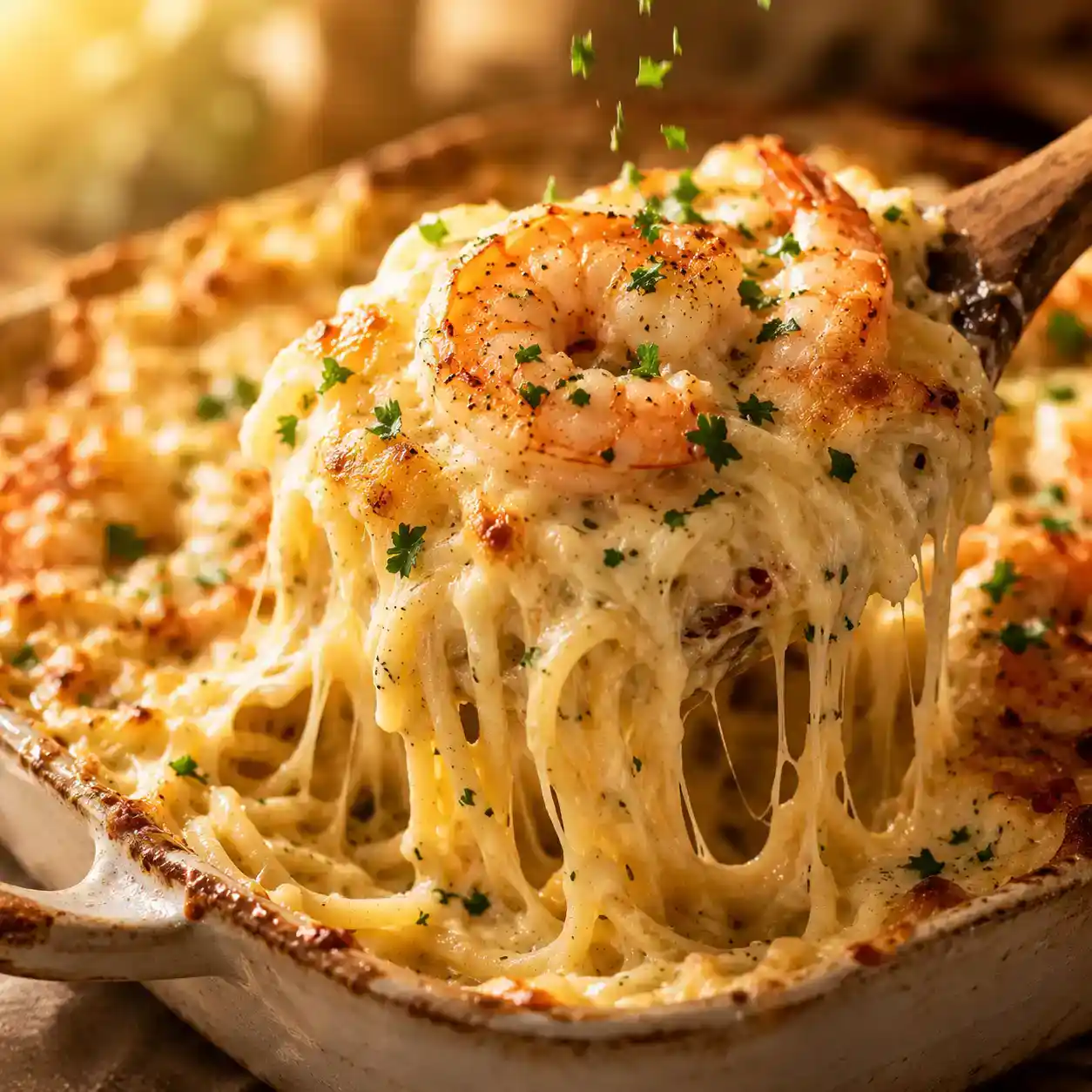

Shrimp Scampi Pasta Bake
Ingredients
Equipment
Method
- Set your oven to 375°F (190°C). Get a large pot of salted water boiling for the pasta.
- Cook your linguine 2 minutes less than the package directions. Drain it, toss with a tiny drizzle of olive oil so it does not stick, and set aside.
- In a large oven-safe skillet, or a regular skillet if transferring to a baking dish, melt butter over medium heat. Add the garlic and red pepper flakes. Cook for about 1 minute, just until fragrant, being careful not to burn the garlic.
- Add the shrimp in a single layer. Cook 1 to 2 minutes per side, just until barely pink. Remove them from the pan and set aside so they can finish cooking in the oven.
- Pour the white wine into the hot skillet and let it bubble for 2 minutes, scraping up any browned bits from the bottom. Add the lemon juice, lemon zest, and heavy cream. Simmer for 3 to 4 minutes until slightly thickened. Stir in half the Parmesan, then taste and adjust the salt and pepper.
- Add the cooked pasta to the sauce and toss well to coat every strand. If using an oven-safe skillet, arrange the shrimp on top in the pan. Otherwise, transfer the sauced pasta to a greased 9×13 baking dish and nestle the shrimp in and around the pasta.
- Scatter the remaining Parmesan and all the mozzarella over the top, covering the pasta well for a golden cheese crust.
- Bake for 15 to 20 minutes, until the cheese is fully melted, bubbling at the edges, and starting to turn golden brown in spots. For more color, broil for 2 minutes at the end, watching closely.
- Let the pasta bake sit for 5 minutes before serving. Finish with fresh chopped parsley and serve warm.