
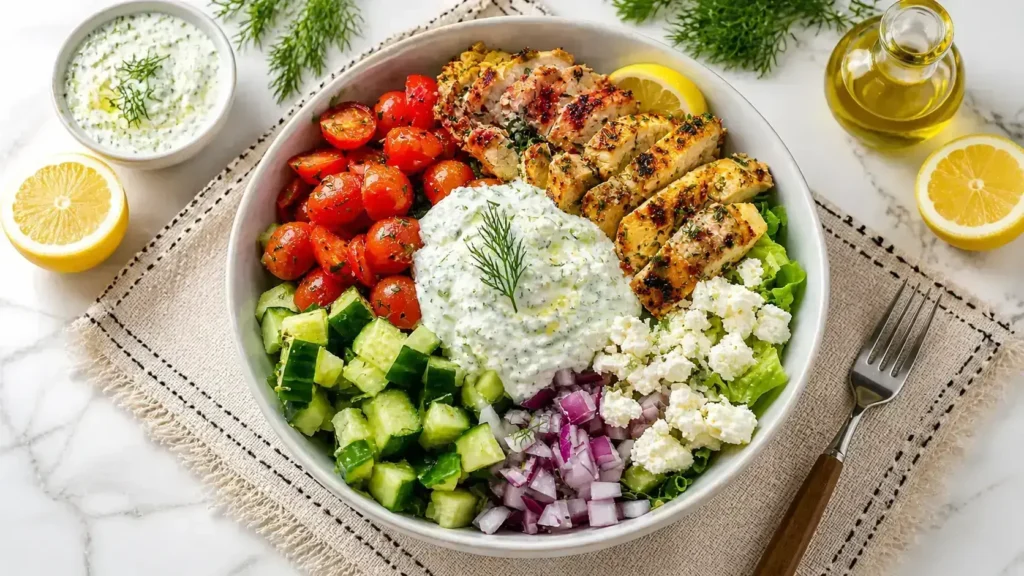
Greek Chicken Bowls are, hands down, my favorite amazing meal prep delight — and it all started with a desperate Wednesday night fridge raid. One of those weeks where I’d been meaning to plan my meals, then didn’t, then found myself staring into an open fridge at 7 pm with four chicken breasts, half a block of feta very close to its best-by date, and a cucumber that still had some dignity left. I had oregano, I had lemons — I always have lemons, honestly, a little obsessively — and a container of Greek yogurt I’d bought for something and completely forgotten about.
I threw the chicken into a marinade I’d been meaning to try for a while. Lemon zest, olive oil, dried oregano, a little garlic powder, and some honey, because a tiny bit of sweet makes that herb marinade really sing. Let it sit for 45 minutes while I throw together something resembling tzatziki. Cooked the rice and chopped everything up.
And then I stood there eating out of the bowl I’d just assembled, standing at my kitchen counter, genuinely surprised. The smell alone — that warm, toasty oregano hitting the hot pan — had already set expectations high. But the texture contrast? Crispy-edged chicken still juicy in the middle, next to cool, crunchy cucumber, and creamy tzatziki — it was that combination that made me stop and think, okay, I need to write this down.
I made four more servings that night. Meal prep for the week, done. And honestly? By Thursday lunch, I was already a little sad that only two containers were left.
Why These Greek Chicken Bowls Belong in Your Weekly Rotation
This is one of those recipes I’d put in the easy clean eating recipes category without any hesitation — but it doesn’t feel like you’re eating something virtuous and joyless. That’s the thing. It tastes indulgent. The tzatziki is rich and cooling, the chicken has this deeply savory edge from the marinade, and the feta is salty and crumbly in the best way.
It’s genuinely one of the best health dinner recipes I’ve come across because it checks every practical box without sacrificing a single bite of flavor. High protein from the chicken and Greek yogurt. Fiber and vitamins from the raw veggies. Whole grain option with brown rice or quinoa. And the olive oil in the marinade? Good fat, great flavor.
For meal prep, clean eating specifically, it’s near-perfect. The components stay separate until you’re ready to eat, so nothing goes soggy. You can build four bowls on Sunday, and they’re just as good on Thursday — actually, I’d argue the chicken gets even better as it sits in the fridge for a day. The flavors keep developing.
Side note: I’ve made these Greek chicken bowls for a few friends who swear they “don’t like healthy food,” and every single one of them asked for the recipe. Just saying. Sometimes the best approach to healthy bowls is not telling people they’re healthy until after they’ve already eaten two servings.
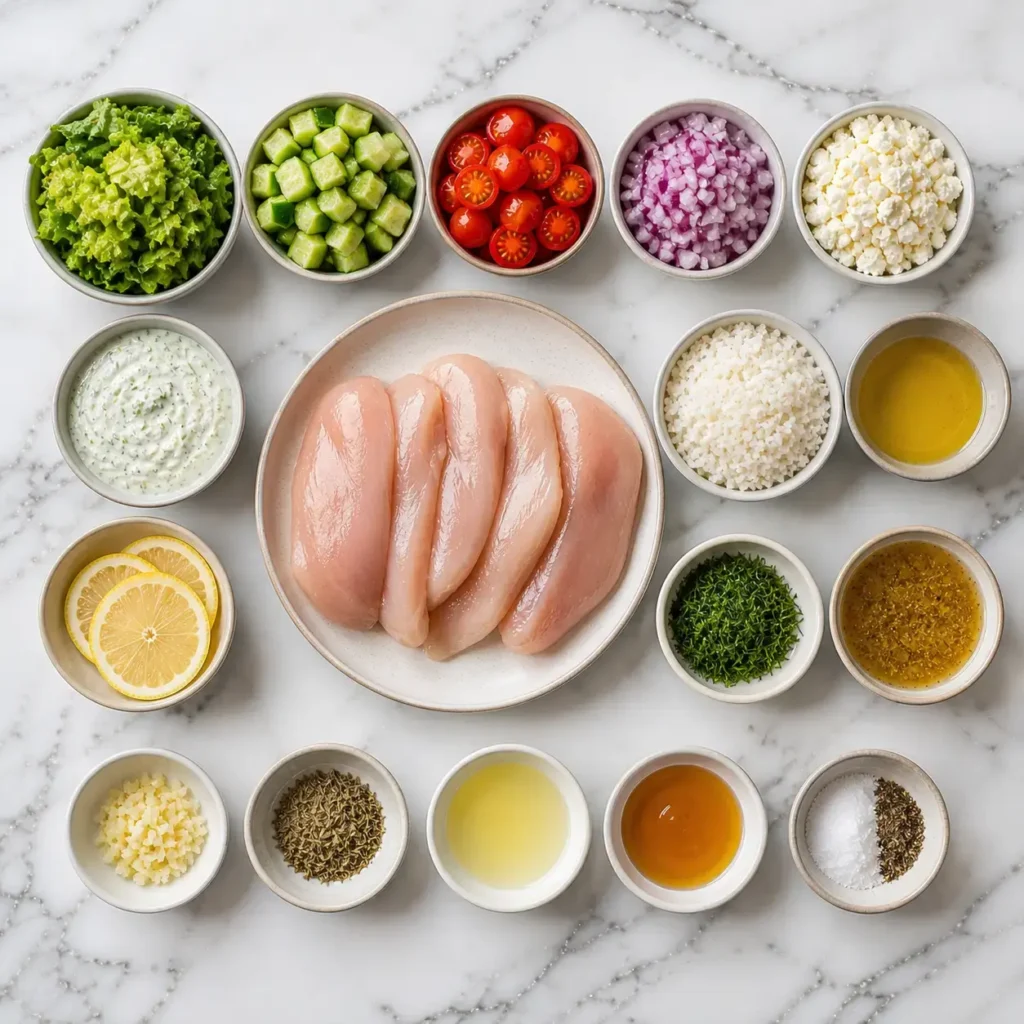
Every Ingredient You’ll Need (and Smart Swaps)
For the Chicken Marinade
- 4 small chicken breasts (about 1¼ lbs), pounded to ½ inch thick
- ¼ cup olive oil
- 1 tablespoon lemon zest
- 2 tablespoons fresh lemon juice
- 2 tablespoons honey
- 1 teaspoon garlic powder
- 1½ teaspoons dried oregano
- 1½ teaspoons dried basil
- 1 teaspoon salt
- ¼ teaspoon black pepper
- ½ teaspoon red pepper flakes (optional but recommended)
For the Bowls
- 2 cups cooked rice, quinoa, or cauliflower rice
- 2 cups halved grape or cherry tomatoes
- 2 cups diced cucumber (English or Persian best)
- 4 cups shredded romaine lettuce
- 1 cup thinly sliced red onion
- ½ cup crumbled feta cheese
For the Homemade Tzatziki
- 1 cup plain full-fat Greek yogurt
- ½ cup grated cucumber, squeezed very dry
- 1 tablespoon lemon juice
- 1 tablespoon olive oil
- 1 teaspoon minced garlic (about 1 small clove)
- ¼ teaspoon salt, or to taste
- 1 tablespoon fresh dill, finely chopped
Ingredient Swaps That Actually Work
No chicken breasts? Chicken thighs work beautifully here — they stay even juicier and forgive a bit of overcooking. For a vegetarian version, thick slabs of halloumi or marinated chickpeas make a genuinely satisfying swap that keeps the Greek flavor profile intact.
Rice is the classic base, but honestly, quinoa is my personal preference for meal prep because it holds up better over several days without getting gummy. Cauliflower rice works if you’re going very low carb — just be warned, it’s a different texture experience.
If you can’t find fresh dill for the tzatziki, dried dill works in a pinch (use about ½ teaspoon instead of 1 tablespoon fresh). It won’t be quite as vibrant, but it still does the job.
How to Make Greek Chicken Bowls: Amazing Meal Prep Delight Step by Step
Step 1 — Make the marinade. Whisk together olive oil, lemon zest and juice, honey, garlic powder, oregano, basil, salt, pepper, and red pepper flakes in a bowl until the honey is fully incorporated, and the mixture looks glossy and fragrant. It should smell incredible at this point — that’s a good sign.
Step 2 — Pound and marinate the chicken. Place the chicken breasts between two sheets of plastic wrap and pound to an even ½-inch thickness. This step is not optional — even thickness means even cooking. Transfer chicken to the marinade and toss to coat every surface. Let it marinate for at least 30 minutes at room temperature, or up to 8 hours in the fridge. Longer is better.
Step 3 — Make the tzatziki. Grate the cucumber and wring it out in a clean kitchen towel until almost completely dry — this is the step most people skip and then wonder why their tzatziki is watery. Mix it into the Greek yogurt along with lemon juice, olive oil, minced garlic, salt, and fresh dill. Taste and adjust. Cover and refrigerate while you cook everything else; the flavors bloom beautifully as it rests.
Step 4 — Cook the chicken. Heat a skillet over medium-high heat with a drizzle of oil. Shake excess marinade off the chicken (you want it seared, not steamed) and cook 5–7 minutes per side until golden and the internal temperature reaches 165°F. Let it rest for 5 minutes before slicing — this is non-negotiable if you want juicy chicken.
Step 5 — Cook your grain base. While the chicken rests, make sure your rice or quinoa is ready. Season it lightly with a little olive oil and salt — even a small amount of seasoning makes a big difference in the finished bowl.
Step 6 — Assemble the bowls. Start with the grain base, then pile on the romaine, tomatoes, cucumber, and red onion. Slice the chicken and fan it over the top. Scatter feta generously. Spoon tzatziki over everything right before eating — or store it separately for meal prep.
3 Pro Tips From Too Many Batches Made
Tip 1 — The dry squeeze is non-negotiable. When you grate that cucumber for the tzatziki, squeeze it in a towel until you think you’ve squeezed enough, then squeeze again. I’m not kidding. Cucumber holds a shocking amount of water. If you skip this or half-do it, you’ll end up with tzatziki that’s closer to cucumber soup — still tasty, but not the thick, creamy sauce you’re going for. Dry cucumber = proper tzatziki texture.
Tip 2 — Let the pan get hot before the chicken goes in. A properly hot skillet is what gives you that golden, slightly crispy exterior on the chicken instead of a pale, sad, gray result. Medium-high heat, a thin film of oil, and you want to hear a proper sizzle the moment the chicken touches the pan. If it doesn’t sizzle, pull it back out and wait longer. Those caramelized edges carry so much flavor.
Tip 3 — Build bowls right before eating, not before storing. For meal prep, keep every component in a separate container. The chicken, the grain, the veggies, and especially the tzatziki all live separately until you’re ready to eat. I know it sounds fussy, but assembled bowls go watery and the lettuce wilts. Ten seconds of assembly at lunchtime is worth it — everything stays fresh, the textures hold, and the bowls actually taste the way they’re supposed to.
Lesson learned the hard way: The first time I made this recipe for other people, I got overconfident and assembled all four bowls completely in advance — tzatziki drizzled right over the top, the whole thing. Left them in the fridge overnight. By the next day, the lettuce had gone limp and sad, the tzatziki had thinned out from the vegetable moisture, and the tomatoes had released so much liquid that the rice was basically sitting in a puddle. The flavors were still there, but the texture experience was rough. Lesson: keep tzatziki in a separate little container tucked into the corner of the meal prep box. Every time. No shortcuts there.
Greek Chicken Bowls Variations Worth Trying
This recipe is basically a template, and once you’ve made it once, you’ll start seeing all the ways to riff on it.
Low-carb version: Swap the rice for cauliflower rice or even just extra romaine. The bowl still feels substantial because the protein and tzatziki carry it.
Spicy harissa twist: Add a tablespoon of harissa paste to the marinade. It brings a smoky heat that plays beautifully against the cooling tzatziki.
Vegetarian / receitas fitness: Use marinated chickpeas or grilled halloumi. The marinade works on both. Great for anyone following a plant-based fitness routine who still wants a solid recipe that delivers on protein.
Grain bowl remix: Try farro or bulgur wheat for a nuttier, chewier base. Both absorb the tzatziki and chicken juices in a genuinely satisfying way.
Side thought: I’ve also done a version with sliced olives and roasted red peppers added to the bowl, which goes in a more Mediterranean direction. Not classic, but very good. Worth trying if you have those things lurking in the pantry.
If you enjoy healthy chicken bowls, don’t miss my High Protein Chicken Burrito Bowl for a Mexican-inspired meal pre. If you’re looking for something with a spicy kick, my High Protein Buffalo Chicken Bowl is another easy, protein-packed option that’s perfect for lunch or dinner.
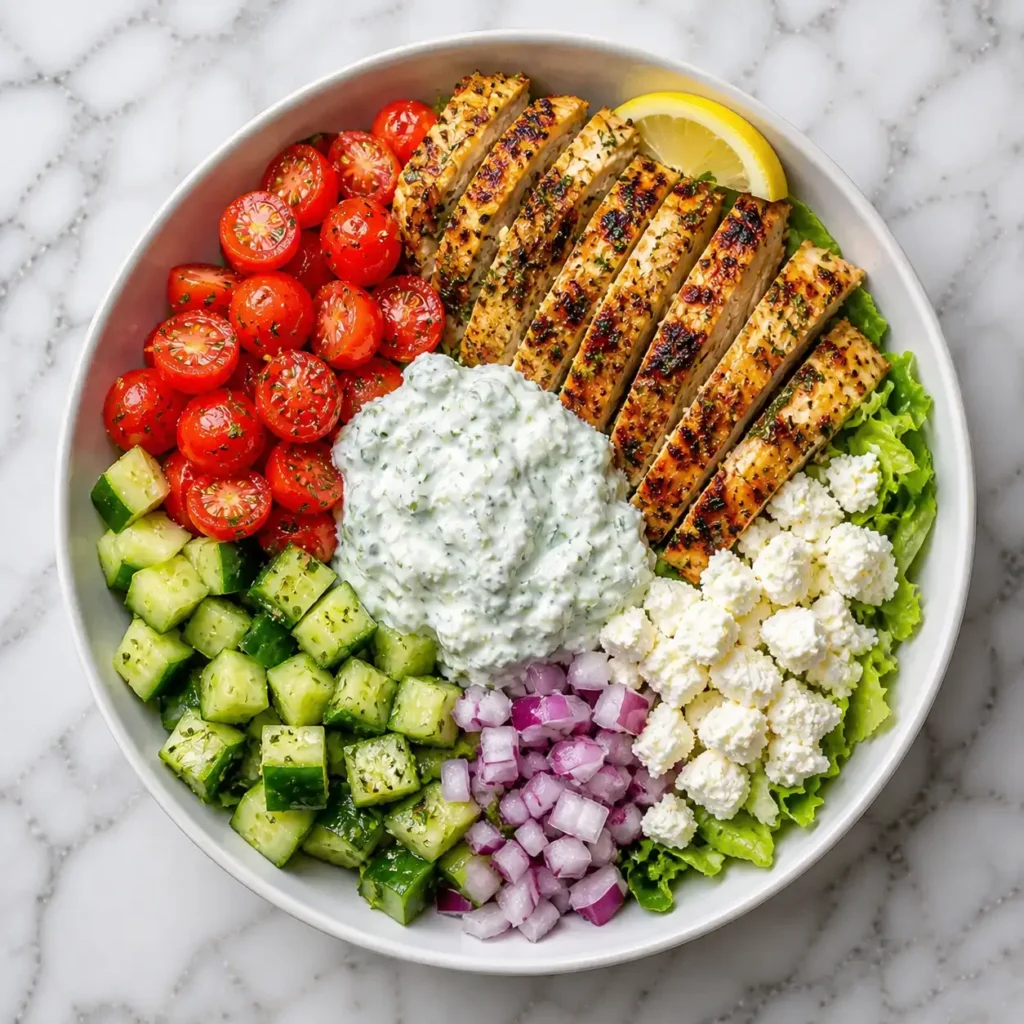
Storage, Meal Prep, and Serving Ideas
For meal prep and clean eating, this recipe is genuinely one of the most reliable in my rotation. Cooked chicken keeps well in an airtight container for up to 4 days in the refrigerator. The tzatziki sauce lasts about 3–4 days as well — it actually improves on day two as the garlic and dill fully infuse into the yogurt.
Raw veggies — cucumber, tomatoes, red onion — are best chopped fresh each day or kept dry and unsealed in the fridge. Tomatoes in particular can start to weep after a day or two, so if you’re prepping ahead, I’d slice those the morning of rather than the night before.
The cooked rice or quinoa keeps perfectly for 4–5 days. Reheat it with a splash of water to keep it from drying out.
For serving, these bowls work equally well warm or cold. In summer, cool chicken over cool grains with cold tzatziki is genuinely refreshing. In winter, I warm the chicken and grain base and keep the veggies and tzatziki cold, so you get that warm-cool contrast. It’s a healthy dinner that feels appropriate year-round.
These bowls also travel well to work. Pack the tzatziki in a small separate container, tuck it in beside the bowl, and you’ve got a lunch that genuinely feels like you made an effort — because you did, on Sunday.
Frequently Asked Questions About Greek Chicken Bowls
Can I use an air fryer instead of a skillet?
Absolutely, and honestly, the air fryer gives a really nice result. Cook the marinated chicken at 390°F for 12–15 minutes, flipping halfway. It won’t have quite the same seared exterior as a hot skillet, but the inside stays beautifully juicy, and it’s hands-off, which is a win on a busy night.
How long should I marinate the chicken?
Minimum 30 minutes, and you’ll taste the difference between 30 minutes and 2 hours. The sweet spot is somewhere between 1 and 4 hours. If you marinate overnight (up to 8 hours), the lemon can start to break down the texture of the chicken a little — still fine to eat, but slightly more “cooked” in texture even before it hits the heat.
Is this recipe good for fitness meal prep?
It’s genuinely one of the better ones I’ve come across. Per bowl, you’re looking at roughly 35–40g of protein from the chicken alone, plus additional protein from the Greek yogurt in the tzatziki. Low in saturated fat, high in fiber from the vegetables, and a whole-grain base. It fits cleanly into almost any fitness-oriented eating plan — whether you’re following recetas fitness, abendessen rezepte for clean evenings, or a recette santé approach.
Can I freeze these bowls?
The chicken and the grain base freeze well separately. The tzatziki and fresh vegetables do not — they go watery and lose their texture completely when thawed. So: freeze the protein and grain, then assemble fresh with newly chopped veggies and tzatziki when you’re ready to eat.
What makes this different from a regular chicken salad bowl?
The marinade, mostly. That combination of lemon zest, oregano, basil, and honey creates a flavor profile that’s distinctly Mediterranean — not just “chicken and vegetables.” And the homemade tzatziki is a complete game-changer. It’s thicker, more garlicky, and fresher than anything store-bought, and it ties the whole bowl together in a way a simple dressing just doesn’t.
Can I make this dairy-free?
Yes, with a couple of swaps. Use a thick coconut yogurt or cashew yogurt in the tzatziki — it won’t be identical, but it’s good. Skip the feta, or replace it with a dairy-free feta if you can find one. The marinade itself is completely dairy-free as written.
How do I keep the lettuce from wilting in my meal prep containers?
Two things help: first, make sure the lettuce is completely dry before packing (spin it in a salad spinner or pat it dry). Second, keep a folded paper towel in the container to absorb any excess moisture. Store the grain base and warm components at the bottom, lettuce at the top, so heat doesn’t wilt it from below.
Now that you’ve got the full recipe, the tips, the troubleshooting, and a few directions to take it — I want to know: are you making these Greek Chicken Bowls for meal prep this week, or cooking them fresh tonight? And which variation are you trying first?
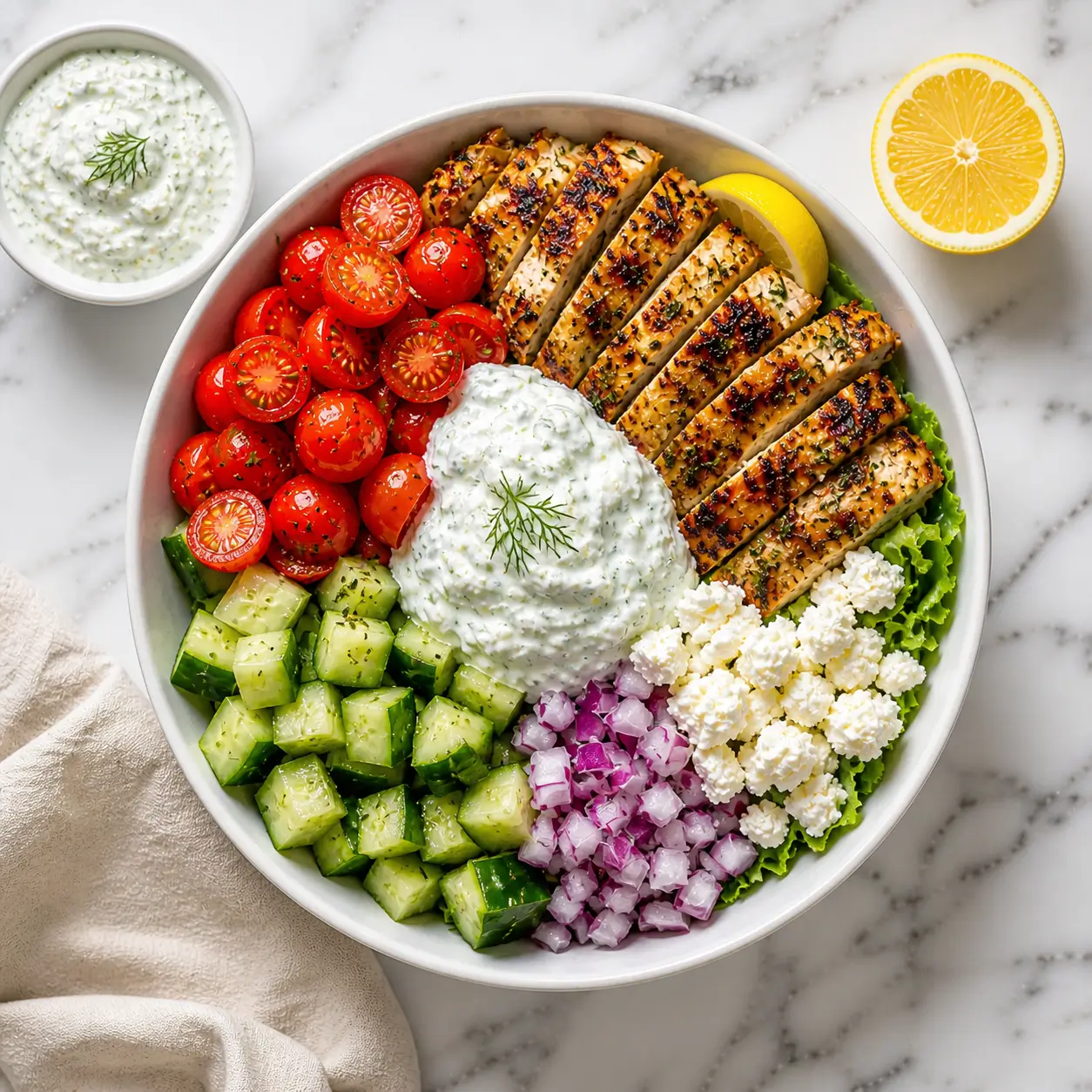
Greek Chicken Bowls: Amazing Meal Prep Delight
Ingredients
Equipment
Method
- Whisk together olive oil, lemon zest and juice, honey, garlic powder, oregano, basil, salt, pepper, and red pepper flakes in a bowl until the honey is fully incorporated and the mixture looks glossy and fragrant.
- Place the chicken breasts between two sheets of plastic wrap and pound to an even ½-inch thickness. Transfer to the marinade and toss to coat every surface. Marinate for at least 30 minutes at room temperature, or up to 8 hours in the fridge.
- Grate the cucumber and wring it out in a clean kitchen towel until almost completely dry. Mix into the Greek yogurt with lemon juice, olive oil, minced garlic, salt, and fresh dill. Taste and adjust. Cover and refrigerate while you cook.
- Heat a skillet over medium-high heat with a drizzle of oil. Shake excess marinade off the chicken and cook 5–7 minutes per side until golden and the internal temperature reaches 165°F (74°C). Rest for 5 minutes before slicing.
- While the chicken rests, make sure your rice or quinoa is ready. Season lightly with a drizzle of olive oil and a pinch of salt.
- Add the grain base to each bowl. Pile on the romaine, tomatoes, cucumber, and red onion. Slice the chicken and fan it over the top. Scatter feta generously. Spoon tzatziki over everything right before eating — or keep it separate for meal prep.