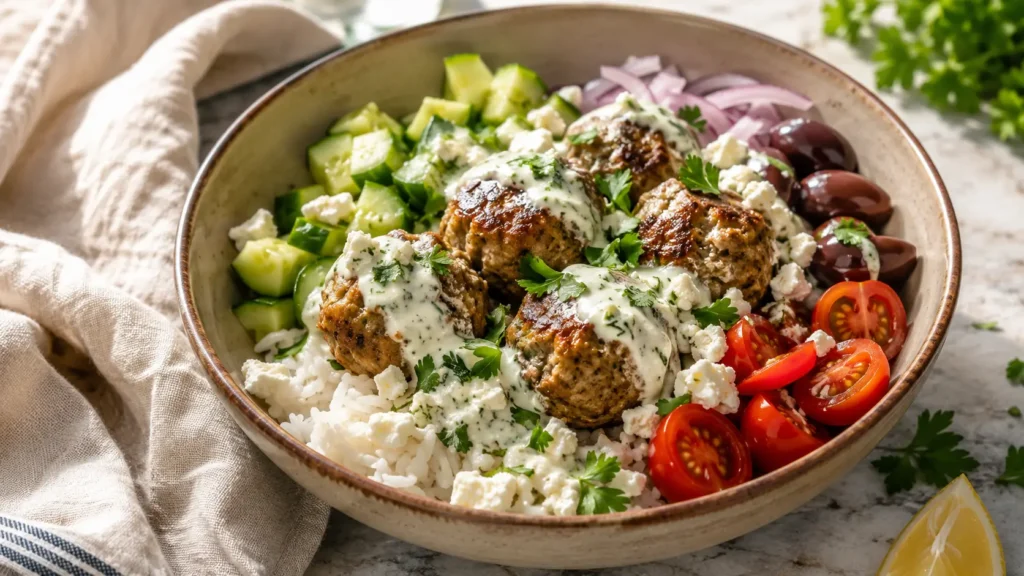
I made these Greek Turkey Meatball Bowls on a Tuesday that had absolutely no business being that hectic, and somehow they turned into the thing that saved my week. I remember standing at the stove, half-listening to a podcast, half-watching the meatballs turn that deep golden-brown color, and thinking, okay, this is the one I’m writing about. There’s something about the smell of garlic and oregano hitting a hot skillet that resets your whole mood. If you’ve been searching for Greek turkey meatball bowls that actually taste like something you’d order at a Mediterranean spot, but come together in your own kitchen in under 40 minutes, this is it.
This recipe leans lean, bright, and satisfying all at once. Juicy turkey meatballs, a lemony herb sauce, crisp veggies, and a scoop of something starchy underneath to soak everything up. It’s the kind of healthy turkey bowl that doesn’t feel like “diet food,” which, honestly, is the whole point.
Why This Mediterranean Turkey Bowl Works So Well
Ground turkey gets a bad reputation sometimes, mostly because people cook it dry and sad and then wonder why nobody’s excited about dinner. The trick, and I learned this the annoying way, is fat and moisture. Turkey meatballs need a little help to stay juicy, which is where things like grated onion, a splash of milk, and good olive oil come in.
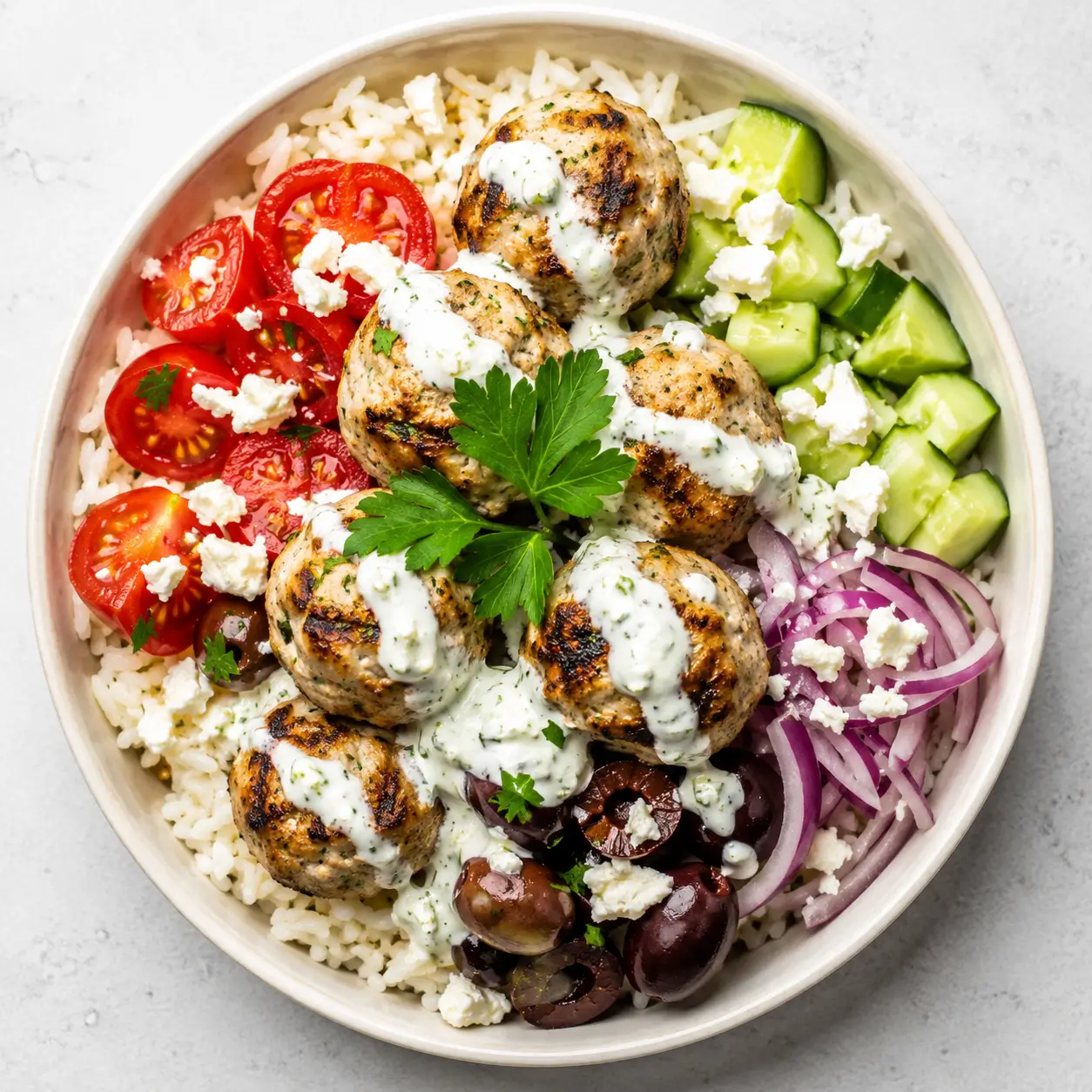
What I love about this particular turkey meatball meal prep setup is the contrast. You’ve got warm, herby meatballs sitting next to cool, crunchy cucumber and tomato, a dollop of creamy tzatziki, and something soft underneath like rice or quinoa. Texture-wise, it hits every note. Warm and cold. Soft and crisp. Rich and bright. That’s the kind of bowl you actually look forward to eating, not just one you’re forcing down because it’s “healthy.”
And it holds up beautifully for meal prep, which honestly might be the best part. These Greek turkey meatballs taste even better the next day once the herbs have had time to settle in.
Ingredients You’ll Need (and Smart Swaps)
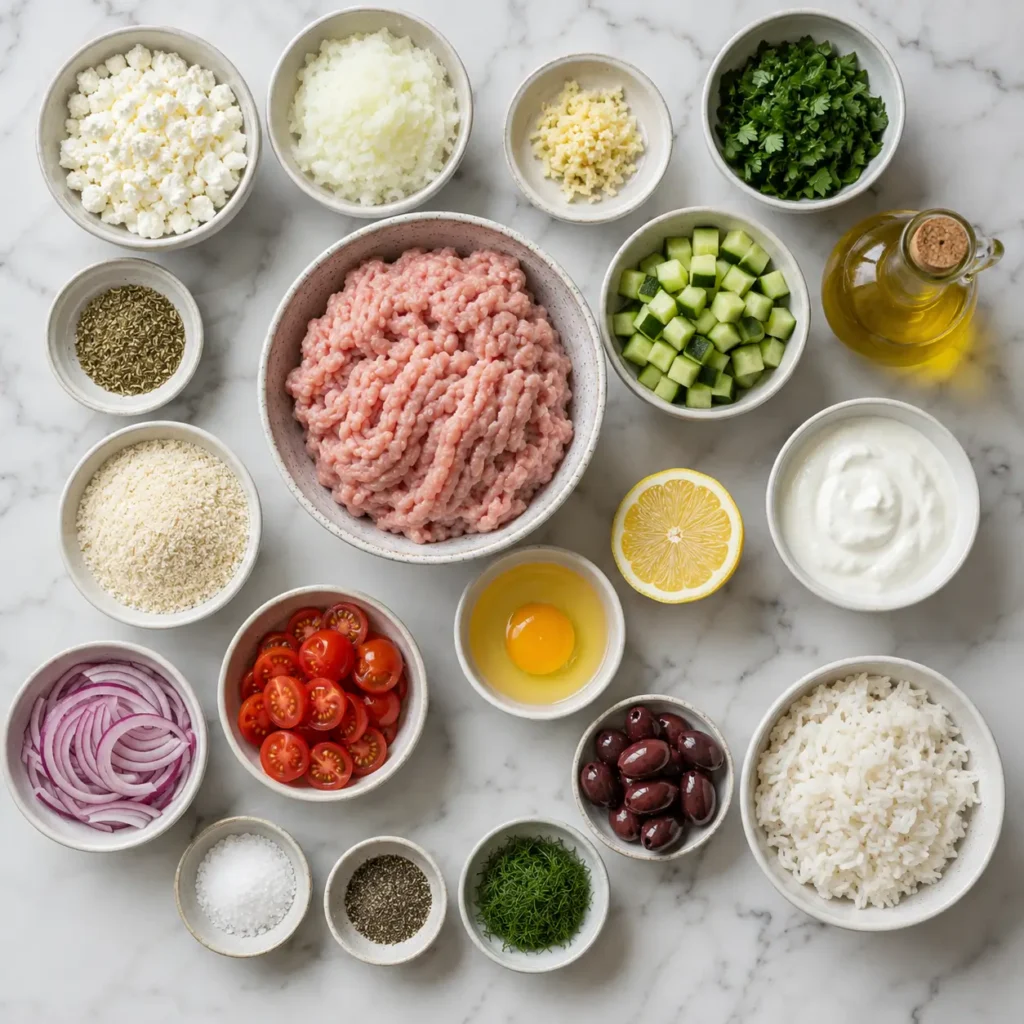
Here’s what goes into the meatballs themselves, plus the bowl components. Nothing exotic, nothing you can’t grab at a regular grocery store.
For the meatballs: ground turkey (93% lean works great; don’t go too lean or they dry out), grated onion, minced garlic, crumbled feta, fresh parsley, dried oregano, a beaten egg, breadcrumbs (panko or regular), salt, pepper, and a little olive oil for cooking.
For the bowls: cooked rice, quinoa, or even orzo as your base; cherry tomatoes, cucumber, red onion, Kalamata olives; more feta because feta is never optional in my house; and a simple lemon-garlic yogurt sauce or tzatziki.
If you’re out of feta, goat cheese works in a pinch, though the flavor shifts a bit tangier. No breadcrumbs on hand? Crushed crackers or even a bit of cooked, cooled rice can bind the mixture. Gluten-free? Swap in gluten-free breadcrumbs or oats, pulsed fine. For the base, cauliflower rice keeps things lower-carb without losing the bowl format that makes this dish so satisfying.
How to Make Greek Turkey Meatball Bowls
Start by preheating your oven to 400°F if you’re baking the meatballs, which is my go-to for meal prep since it’s more hands-off. A skillet works too, and honestly gives a slightly better crust, so pick your battle depending on how much attention you want to give this.
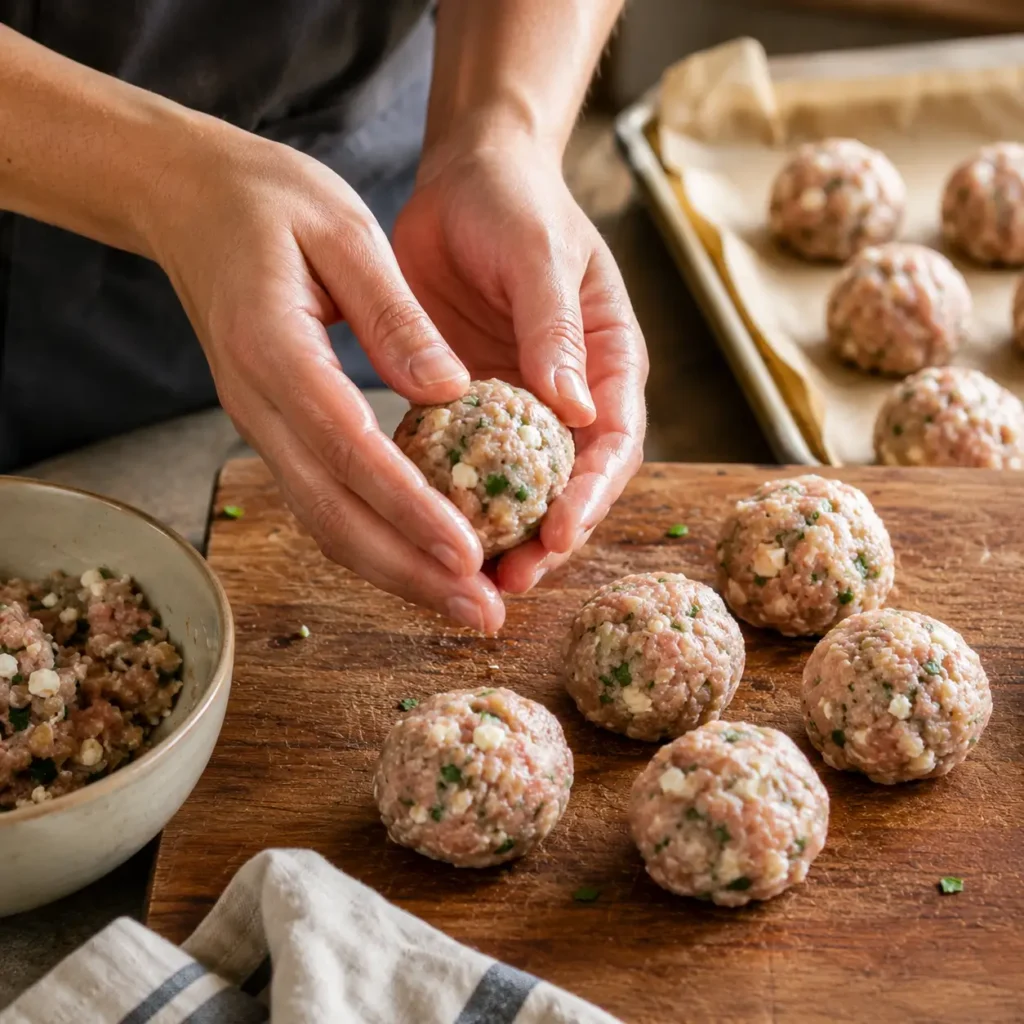
In a large bowl, combine the ground turkey, grated onion, minced garlic, crumbled feta, chopped parsley, oregano, egg, breadcrumbs, salt, and pepper. Mix gently with your hands, just until combined. Overmixing is the fastest way to tough, rubbery meatballs, so resist the urge to really work the mixture.
Roll into golf-ball-sized portions, about 1.5 tablespoons each. You should get around 18 to 20 meatballs. Place them on a parchment-lined baking sheet with a little space between each one, then bake for 18 to 20 minutes, flipping halfway, until they’re golden and cooked through to 165°F internally.
If you’re skillet-cooking instead, heat olive oil over medium heat and sear the meatballs in batches, turning every few minutes, about 10 to 12 minutes total. Don’t crowd the pan. I did that once, rushing to get everyone fed, and ended up with meatballs that steamed instead of browned. Lesson learned. Give them room.
While those cook, whisk together your lemon-garlic yogurt sauce: plain Greek yogurt, lemon juice, a small grated garlic clove, olive oil, salt, and a pinch of dill if you have it. Chop your cucumber, halve the cherry tomatoes, and slice the red onion thin (soak it in cold water for ten minutes if you want to mellow the sharpness).
To build the bowls, layer your grain base first, then arrange the meatballs, veggies, olives, and feta around it, and finish with a generous drizzle of that sauce. Simple as that.
Pro Tips From My Kitchen
A few things I’ve picked up after making these more times than I can count.
First, chill the meatball mixture for 15 minutes before rolling if it feels too sticky to work with. This happens especially with fattier turkey blends, and a quick fridge rest firms things up nicely.
Second, don’t skip the grated onion. Diced onion gives texture, sure, but grated onion basically melts into the meat and adds moisture without any crunchy bits interrupting the bite. It’s a small move that makes a noticeably big difference.
Third, salt your grain base. I used to just cook plain rice and toss it in the bowl, and it always tasted a little flat next to everything else. Now I add a squeeze of lemon and a pinch of salt to the warm rice right after cooking. Tiny step, big payoff.
Variations to Keep Things Interesting
Once you’ve made the base recipe a couple times, feel free to play around. Swap the rice for warm pita or flatbread and turn it into more of a wrap situation. Add roasted red peppers or a handful of baby spinach wilted right into the warm grains for extra color and nutrients.
You can also spice things up with a pinch of smoked paprika or crushed red pepper in the meatball mix if you want a little heat. For a dairy-free version, skip the feta in the meatballs and swap the yogurt sauce for a tahini-lemon dressing instead, which honestly has its own charm.
Some readers have told me they turn this into a Mediterranean turkey bowl salad by using chopped romaine as the base instead of grains. That works great too, especially in warmer months when a heavier grain bowl feels like too much.
Storage and Meal Prep Tips
These meatballs store beautifully. Once fully cooled, keep them in an airtight container in the fridge for up to 4 days. The sauce should go in its own separate container, and honestly, keep the veggies separate too if you’re prepping ahead, since cucumber especially gets watery and sad sitting in dressing for days.
For freezing, cooked meatballs freeze well for up to 3 months. Lay them flat on a tray to freeze individually first, then transfer to a freezer bag once solid; that way they don’t clump into one giant meatball brick (ask me how I know).
To reheat, a quick zap in the microwave works, though I prefer a few minutes in a covered skillet with a splash of water to keep them from drying out. Reassemble your bowl fresh each time rather than storing it fully built, and it’ll taste like you just made it.
Troubleshooting Common Mistakes
Meatballs falling apart? Your mixture probably needs another egg or a touch more breadcrumb to help everything bind. Turkey has less natural fat and structure than beef, so it needs a little extra support.
Dry, tough meatballs usually mean overmixing, overbaking, or too-lean turkey. Pull them the moment they hit 165°F rather than leaving them in “just a bit longer for safety,” which is a trap I’ve fallen into more than once.
If your sauce tastes flat, it almost always needs more lemon or salt, sometimes both. Yogurt sauces mute flavor more than you’d expect, so taste and adjust right before serving.
Frequently Asked Questions
Can I make Greek Turkey Meatball Bowls ahead of time?
Yes, they’re actually one of the better healthy turkey bowls for meal prep. Cook the meatballs and grains ahead, store components separately, and assemble fresh for the best texture.
What’s the best grain to use for these bowls?
Rice, quinoa, and orzo all work well. Quinoa adds a bit more protein and a nutty flavor, while rice keeps things classic and simple.
Can I use ground chicken instead of turkey?
Absolutely, ground chicken works as a direct swap in this recipe with the same cook time and technique.
How do I keep turkey meatballs from drying out?
Use 93% lean turkey rather than 99%, add grated onion for moisture, and avoid overbaking past 165°F internal temperature.
Is this recipe good for low-carb eating?
Yes, swap the grain base for cauliflower rice or extra greens and the bowl stays low-carb while keeping all the same flavors.
Can I freeze the meatballs?
Yes, they freeze well for up to 3 months. Freeze them flat on a tray first, then transfer to a bag once solid.
So, would you build your bowl grain-based, salad-style, or wrapped in warm pita? I’d genuinely love to know which way you’d take these Greek Turkey Meatball Bowls.

Greek Turkey Meatball Bowls
Ingredients
Equipment
Method
- Preheat the oven to 400°F if baking, or heat olive oil in a skillet over medium heat if pan-searing.
- In a large bowl, combine ground turkey, grated onion, minced garlic, crumbled feta, parsley, oregano, egg, breadcrumbs, salt, and pepper. Mix gently by hand just until combined, being careful not to overmix.
- Roll the mixture into golf-ball-sized portions, about 1.5 tablespoons each, to make roughly 18 to 20 meatballs.
- If baking, place meatballs on a parchment-lined baking sheet with space between each one and bake for 18 to 20 minutes, flipping halfway, until golden and cooked through to 165°F internally.
- If pan-searing, cook the meatballs in batches without crowding the pan, turning every few minutes, for about 10 to 12 minutes total until browned and cooked through to 165°F internally.
- While the meatballs cook, whisk together the Greek yogurt, lemon juice, grated garlic, olive oil, salt, and dill to make the sauce.
- Chop the cucumber, halve the cherry tomatoes, and thinly slice the red onion, soaking it in cold water for 10 minutes to mellow the sharpness if desired.
- Assemble the bowls by layering the grain base, then arranging the meatballs, tomatoes, cucumber, red onion, olives, and feta around it.
- Finish with a generous drizzle of the lemon-garlic yogurt sauce and serve warm.